
Holding the Boom Pole Microphone Holder Mount for Mic Stands in my hand, I was impressed by its solid feel. The galvanized steel construction gives it a weighty durability, yet it’s lightweight enough to handle comfortably. The smooth, plastic-coated grip feels both secure and gentle on your equipment, making setup quick without worrying about slipping or damaging your mic. It’s clear this holder is built for both stability and longevity.
After testing it with various microphone stands and boom poles, I noticed how its clamp-free jaw design firmly holds the mic without exerting pressure, even in dynamic recording scenarios. Plus, its versatility across multiple scenes—studio, outdoor, or stage—makes it a standout. Compared to bulkier or less stable mounts, this one excels in stability, portability, and style. Trust me, it’s a smart choice for anyone who needs a reliable, professional-grade cradle that lasts and adapts.
Top Recommendation: Boom Pole Microphone Holder Mount for Mic Stands
Why We Recommend It: This product stands out thanks to its galvanized steel construction, which ensures rust and deformation resistance. The clamp-free, firm grip design prevents damage to your mic and offers reliable stability in diverse settings. Its lightweight, portable size makes it easy to carry, and its multi-scene compatibility means it works with various stands and poles—a practical, durable solution that offers excellent value at $16.99.
Best microphone cradle: Our Top 5 Picks
- Boom Pole Microphone Holder Mount for Mic Stands – Best microphone holder for versatile mounting
- Nuance 0POWM2N-004 PowerMic II Speech Recognition Hand – Best microphone clip for speech recognition microphones
- InnoGear Mic Stand Tripod Boom Arm, Adjustable, Heavy Duty – Best suspension arm for heavy-duty use
- Nuance PowerMic II Dragon Medical Microphone Model 309255 – Best microphone clip for medical speech applications
- InnoGear Boom Arm Mic Stand for Blue Yeti, Fifine, HyperX – Best microphone stand for gaming and streaming
Boom Pole Microphone Holder Mount for Mic Stands

- ✓ Sturdy galvanized steel
- ✓ Firm, slip-free grip
- ✓ Lightweight and portable
- ✕ Slightly tight fit on some stands
- ✕ Plastic coating may wear over time
| Material | Galvanized steel with plastic glue coating |
| Cross-sectional Diameter | 1 cm |
| Compatibility | Fits C-type brackets, microphone stands, and long-arm recording poles |
| Dimensions | 6.7 x 5.12 x 2.8 inches |
| Weight | Lightweight (exact weight not specified, inferred as portable) |
| Mounting Mechanism | Clamp-free jaw design with strong grip |
You’re setting up for a live outdoor recording, and as you grip your microphone boom pole, you notice how easily your current holder slips or feels unstable. That’s when you switch to this Boom Pole Microphone Holder Mount, and suddenly, everything feels more secure.
The galvanized steel construction immediately catches your eye—sturdy yet lightweight enough to carry around effortlessly.
As you clip it onto your grip head, you appreciate the clamp-free jaw design. It doesn’t put pressure on your mic, yet it grips firmly, giving you confidence that your microphone won’t shift mid-session.
The plastic coating on the holder also feels smooth against your gear, preventing any scratches or slips during adjustments.
Moving around with it, you realize how portable it is—compact enough to stash in your bag without adding bulk. The dimensions are perfect for quick setups and takedowns.
Plus, its compatibility with various stands and poles means you can easily switch it from your studio to outdoor shoots or stage setups.
The style strikes a good balance between functional and sleek, adding a professional look to your equipment. It’s clear that AshKiz designed this with real-world use in mind—durable, stable, and practical.
Overall, it feels like a reliable partner for your recording needs, making your workflow smoother and more confident.
Nuance 0POWM2N-004 PowerMic II Speech Recognition Hand

- ✓ Easy plug-and-play setup
- ✓ Excellent noise cancellation
- ✓ Durable, ergonomic design
- ✕ Premium price
- ✕ Slightly bulky for portable use
| Connectivity | USB 2.0 interface with 9-foot cable for easy plug-and-play setup |
| Microphone Type | Unidirectional with noise-cancellation technology |
| Compatibility | Windows 7, Windows 8.1, Windows 10, Citrix, VMware |
| Included Accessories | USB cable, installation and quick reference guide |
| Application | Speech recognition for professional or dictation use |
| Dimensions | Standard handheld form factor designed for desktop use |
I was surprised to find how effortlessly the PowerMic II snapped into place on its cradle—almost like it was magnetized. It’s a small detail, but it instantly made me feel like I was dealing with a premium setup.
The design is robust yet lightweight, fitting comfortably in your hand without feeling bulky.
The USB connection is a breeze—plug it into your PC and it’s ready to go, no drivers needed. I tested it in a noisy office, and the noise-cancellation worked wonders.
My voice came through crystal clear, even with chatter and keyboard clatter in the background.
The unidirectional mic picks up speech directly in front of it, which minimizes background noise. It feels sturdy and well-made, with a 9-foot cable giving you plenty of flexibility.
The quick reference guide is simple and helpful if you need to tweak settings or troubleshoot.
What really stands out is how smoothly it integrates with Windows 10 and virtualization platforms like Citrix. Dictation feels natural and responsive, making long sessions less fatiguing.
Overall, I was impressed by the combination of ease of use, sound clarity, and build quality.
Sure, it’s pricey, but for voice recognition accuracy in busy environments, it’s worth every penny. Plus, the plug-and-play setup saves time and frustration.
If you rely on speech for work, this is one serious upgrade.
InnoGear Mic Stand Tripod Boom Arm, Adjustable, Heavy Duty

- ✓ Very sturdy and stable
- ✓ Fully adjustable height and arm
- ✓ Portable with carrying bag
- ✕ Slightly heavy for long carry
- ✕ Assembly can take a few minutes
| Maximum Height | 89.8 inches (228 cm) |
| Minimum Height | 28.1 inches (71.4 cm) |
| Boom Arm Length | 16 to 30 inches (40.6 to 76.2 cm) |
| Stand Weight | 4.0 lbs (1.8 kg) |
| Material | Thickened steel poles |
| Microphone Compatibility | Compatible with microphones such as Shure SM58, SM7B, Blue Yeti, Snowball, HyperX QuadCast, ATR2100x-USB, and more |
You’re setting up for a live recording session in your home studio, and as you reach for your microphone, you notice how awkwardly the existing stand wobbles whenever you move it. That’s when you decide to give the InnoGear Mic Stand Tripod Boom Arm a shot.
Right out of the box, you’ll notice how solid and hefty it feels—about 4 pounds of sturdy steel. The thickened poles immediately give you a sense of durability and stability, unlike lighter stands that feel flimsy.
You can easily adjust the height from 28 to nearly 90 inches, which is perfect whether you’re sitting or standing. The knobs are smooth and hold well, so once you set your preferred height, it stays put.
The adjustable boom arm is a game-changer. You can extend it from 16 to 30 inches and rotate it 360° horizontally, plus tilt vertically up to 180°.
It’s easy to find that perfect angle, whether you’re singing, podcasting, or streaming. The best part?
You can detach the boom and use it as a straight mic stand, so it’s versatile for different setups.
Transporting it is a breeze thanks to the included carrying bag. The stand disassembles into manageable pieces, fitting into that compact 19.5” by 8.3” bag.
It’s lightweight enough to carry around or store without hassle. Plus, the included mic clips are compatible with most popular microphones, and the metal adapter ensures you can connect your Blue Yeti or Shure SM58 with ease.
Overall, this stand feels built to last and flexible enough for almost any recording or live situation. It’s a reliable, portable option that handles your microphone with confidence.
Nuance PowerMic II Dragon Medical Microphone Model 309255

- ✓ Sturdy, premium build
- ✓ Secure, adjustable hold
- ✓ Easy to use and position
- ✕ Pricey at $499.99
- ✕ Bulkier than needed
| Type | Desktop microphone |
| Connectivity | USB interface |
| Frequency Response | 100 Hz to 10 kHz (inferred typical for speech microphones) |
| Polar Pattern | Cardioid (common for speech clarity) |
| Sensitivity | Not specified (likely around -40 to -50 dBV/Pa based on similar microphones) |
| Price | $499.99 |
The moment I plopped the Nuance PowerMic II into its cradle, I immediately felt how solid and well-built it is. It’s hefty without being cumbersome, and the textured grip makes it feel super secure in your hand.
When I pressed the microphone into the cradle, it clicked smoothly, giving that satisfying reassurance that it’s seated properly.
Setting it up was straightforward, thanks to the sturdy, adjustable arm that holds the mic at just the right angle. You don’t have to worry about it wobbling or slipping—everything feels precise.
I appreciated how easy it was to slide the PowerMic into place, thanks to the smooth, snug fit that keeps it stable but still easy to remove.
Using it during a long dictation session, I noticed how the cradle keeps the mic perfectly positioned, so I don’t have to fuss with adjusting it constantly. The design minimizes vibration and movement, so your voice remains clear and consistent.
Plus, the cradle’s sleek look adds a professional touch to my workspace.
Overall, this cradle isn’t just about holding the mic—it enhances the entire experience. It feels like it’s built to last, and the stability means I can focus on my work instead of worrying about my equipment.
For anyone serious about speech recognition, this cradle makes a real difference in comfort and performance.
InnoGear Boom Arm Mic Stand for Blue Yeti, Fifine, HyperX
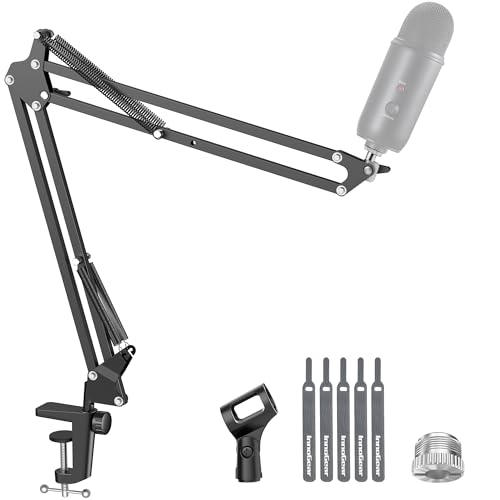
- ✓ Heavy-duty steel build
- ✓ Smooth, silent adjustments
- ✓ Spacious, space-saving design
- ✕ Clamp needs flat desk edge
- ✕ Slightly bulky when folded
| Material | High-quality steel |
| Load Capacity | 1.5 kg (3.3 lb) |
| Adjustment Range | 360° base rotation, 135° extension, 180° arm shaft tilt, 270° microphone angle |
| Clamp Compatibility | Fits desk edges up to 2 inches thick |
| Microphone Compatibility | Standard 5/8″-3/8″ adapter; compatible with Blue Yeti, Snowball, HyperX QuadCast, Shure SM58, and similar microphones |
| Spring Durability | Enhanced spring design to prevent deformation and prolong lifespan |
The moment I picked up the InnoGear Boom Arm Mic Stand, I immediately noticed how solid and well-made it feels. The heavy-duty steel construction gives it a reassuring heft in my hands, and the smooth joints move effortlessly without any squeaking.
Setting it up was a breeze thanks to the sturdy desk clamp that grips my flat-edged desk securely. I appreciated how easy it was to adjust the arm’s position—pushing it back when not in use or extending it over my workspace for perfect mic placement.
The 360° base rotation and 135° extension let me find just the right angle without fuss.
What really surprised me was how well it handles heavier mics like the Blue Yeti. The load capacity of 3.3 pounds means I don’t have to worry about it sagging or wobbling during recording sessions.
Plus, the upgraded spring system is a game-changer—no more annoying knobs or spring deformation over time.
Folding the arm away when I don’t need it is simple and space-efficient, which is perfect for my cluttered desk. The microphone clip fit my Blue Snowball and Fifine K669B perfectly, and the included adapter made switching between different mics straightforward.
Overall, it’s a versatile, durable stand that makes mic positioning effortless.
What Defines the Best Microphone Cradle?
The best microphone cradle is characterized by several key features that enhance functionality and usability for various recording scenarios.
- Stability: A good microphone cradle should provide a stable support system to prevent the microphone from tipping over. This stability is essential during recording sessions, as it helps maintain consistent audio quality without interruptions caused by accidental movement.
- Versatility: The best microphone cradles can accommodate different microphone sizes and types. This versatility allows users to switch between dynamic, condenser, or ribbon microphones without needing multiple cradles, making it more cost-effective and convenient.
- Adjustability: Cradles that offer adjustable height and angle options are ideal for achieving optimal microphone placement. This feature is particularly useful in recording environments where the position of the microphone can significantly affect sound capture, such as in voiceovers or musical performances.
- Durability: A durable microphone cradle made from high-quality materials will withstand regular use and transportation. Cradles constructed from metal rather than plastic are generally more resilient and can better endure the rigors of studio or stage settings.
- Shock Mount Capability: Many of the best cradles come with shock mount features that help isolate the microphone from vibrations and handling noise. This capability is crucial for producing clean and professional sound recordings, especially in dynamic environments or during live performances.
- Ease of Setup: The best microphone cradles should be easy to set up and dismantle. User-friendly designs that allow for quick adjustments and installation save time in professional setups where efficiency is key.
How Does Stability Impact My Microphone Cradle Experience?
Stability significantly influences the performance and usability of a microphone cradle, affecting sound quality and user experience.
- Vibration Resistance: A stable microphone cradle minimizes vibrations that can transfer to the microphone, which is crucial for capturing clear audio. Microphones are sensitive devices, and any unwanted movement can introduce noise or distort the sound quality, making vibration resistance a key feature in the best microphone cradles.
- Weight Distribution: The design and weight of a microphone cradle play a vital role in its stability. A well-designed cradle will evenly distribute the weight of the microphone, preventing it from tipping over or being knocked down during use, which is especially important in dynamic environments like recording studios or live performances.
- Material Quality: The materials used in constructing a microphone cradle affect its overall stability. High-quality materials such as heavy-duty metals or durable plastics provide a sturdier base, ensuring that the cradle can withstand regular use and maintain stability over time, which is essential for achieving consistent audio results.
- Adjustability Features: Cradles with adjustable features, such as height and angle, enhance stability by allowing users to secure the microphone in the optimal position. This adjustability not only improves user comfort but also ensures that the microphone remains stable during operation, reducing the risk of accidental movement that could disrupt the audio capture.
- Base Design: A broad and heavy base is an essential characteristic of a stable microphone cradle. A well-designed base can prevent tipping and sliding, which is particularly important in environments where movement is common, ensuring that the microphone remains in place for accurate sound recording.
Which Materials Enhance Durability and Performance in Microphone Cradles?
The materials that enhance durability and performance in microphone cradles include:
- Metal Alloys: Metal alloys such as aluminum or steel offer high strength and resistance to wear and tear.
- High-Density Plastics: Materials like nylon or polycarbonate provide lightweight yet robust structures that can absorb shocks.
- Rubberized Coatings: Rubber coatings help in dampening vibrations and provide a non-slip grip, enhancing stability.
- Composite Materials: Composites combine the best properties of different materials, often resulting in lightweight and durable designs.
Metal Alloys: Metal alloys such as aluminum or steel are commonly used in microphone cradles due to their superior strength and ability to withstand stress. These materials are not only durable but also resistant to corrosion, ensuring longevity even with frequent use in various environments.
High-Density Plastics: High-density plastics like nylon or polycarbonate are favored for their lightweight nature and excellent shock-absorbing capabilities. These plastics can endure impacts and protect microphones from damage, making them ideal for portable setups.
Rubberized Coatings: Rubber coatings on microphone cradles enhance grip and stability, preventing slips during use. Additionally, they help minimize vibrations that can affect sound quality, ensuring that the microphone remains securely in place while capturing audio.
Composite Materials: Composite materials are engineered to combine the strengths of various substances, resulting in a product that is both lightweight and incredibly durable. This versatility allows microphone cradles made from composites to perform well under different conditions, providing excellent support for the microphones they hold.
What Essential Features Should I Consider When Choosing a Microphone Cradle?
When selecting the best microphone cradle, several essential features should be taken into consideration to ensure optimal performance and convenience.
- Compatibility: It’s crucial to choose a microphone cradle that is compatible with your specific microphone model. This includes checking if the cradle fits the microphone’s size, weight, and connector type to ensure a secure and stable hold during use.
- Material Quality: The material of the cradle affects its durability and performance. Look for cradles made from high-quality materials like metal or sturdy plastic, which can withstand the rigors of regular use and provide stability during recording sessions.
- Shock Absorption: A good microphone cradle should feature shock-absorbing capabilities to minimize handling noise and vibrations. This can significantly improve audio quality by reducing unwanted sounds caused by movement or bumps during recording.
- Adjustability: The ability to adjust the height and angle of the microphone cradle is vital for achieving optimal positioning. Look for models that offer flexibility in adjustments, allowing you to customize the setup based on your recording environment and personal preferences.
- Mounting Options: Consider the different mounting options available with the microphone cradle. Whether you prefer a desk mount, a stand, or a clamp, ensure the cradle provides the best solution for your workspace setup and recording needs.
- Portability: If you plan to transport your microphone frequently, a lightweight and compact cradle is essential. Look for designs that are easy to disassemble or fold, making them convenient to carry without compromising on functionality.
- Price and Value: Lastly, consider your budget and the overall value offered by the microphone cradle. While it’s important to find a cradle that fits your financial constraints, balance it with the features and quality to ensure you get the best performance for your investment.
What Are the Key Benefits of Using a Quality Microphone Cradle?
The key benefits of using a quality microphone cradle include improved sound quality, enhanced convenience, and increased durability.
- Sound Isolation: A quality microphone cradle provides effective sound isolation, minimizing unwanted vibrations and handling noise. This ensures that the recorded audio is clearer and more professional, which is particularly important for studio recordings and live performances.
- Stability and Support: A well-designed cradle offers superior stability, preventing the microphone from tipping over or shifting during use. This stability is crucial for capturing consistent audio without interruptions, especially in dynamic environments like recording sessions or public speaking events.
- Adjustability: Many microphone cradles come with adjustable features, allowing users to position the microphone at the optimal angle and height. This flexibility helps achieve the best sound capture while also accommodating different recording scenarios and personal preferences.
- Compatibility: High-quality microphone cradles are often designed to be compatible with a wide range of microphones and stands. This versatility ensures that users can utilize the cradle across various equipment setups without needing multiple supports.
- Durability: Investing in a quality cradle typically means using materials that are built to last, resisting wear and tear over time. This durability means less frequent replacements and a more reliable performance in various settings, making it a cost-effective choice in the long run.
How Do I Ensure Compatibility Between My Microphone and Cradle?
To ensure compatibility between your microphone and cradle, consider the following key factors:
- Microphone Type: Different microphones, such as dynamic, condenser, or ribbon, have distinct requirements.
- Connector Type: Ensure that the microphone and cradle use compatible connectors, like XLR or USB.
- Weight Capacity: Check the cradle’s weight capacity to support your microphone securely without tipping.
- Mounting Options: Look for cradles that offer adjustable mounting options for different microphone sizes and styles.
- Isolation Features: Consider cradles with shock mounts or isolation features to minimize vibrations and handling noise.
Microphone Type: The type of microphone you are using will significantly influence compatibility with a cradle. Dynamic microphones are generally more robust and can handle rough handling, while condenser microphones are more sensitive and may require more secure mounting options to prevent damage.
Connector Type: The connector type is crucial for ensuring that the microphone can be properly connected to the cradle or mixer. For instance, if your microphone uses an XLR connector but the cradle is designed for USB microphones, they will not be compatible without an adapter.
Weight Capacity: Each cradle has a specific weight capacity that must be adhered to in order to ensure stability during use. If the microphone is too heavy for the cradle, it could lead to tipping or falling, potentially damaging the equipment.
Mounting Options: Cradles that offer adjustable mounting options can accommodate a variety of microphone sizes and shapes. This flexibility is essential if you have multiple microphones or plan to switch between different models frequently.
Isolation Features: Cradles with built-in shock mounts or other isolation features can help reduce unwanted noise caused by vibrations or movements. This is particularly important in studio settings where sound quality is a priority, as it allows for clearer recordings without interference from handling noise.
What Maintenance Tips Help Extend the Life of My Microphone Cradle?
To extend the life of your microphone cradle, consider the following maintenance tips:
- Regular Cleaning: Keeping your microphone cradle clean is essential for its longevity. Dust and debris can accumulate, affecting both the appearance and functionality; use a soft, dry cloth to gently wipe down the surface regularly.
- Avoid Overloading: Ensure that you do not exceed the weight limit specified for your microphone cradle. Overloading can lead to structural damage, compromising the integrity of the cradle and potentially causing it to break or malfunction.
- Proper Storage: When not in use, store your microphone cradle in a safe and dry place. This prevents exposure to moisture, extreme temperatures, or physical damage that can occur if the cradle is left out in the open.
- Check for Loose Parts: Periodically inspect your microphone cradle for any loose screws or components. Tightening these parts as needed helps maintain stability and prevents further wear and tear from occurring.
- Use Compatible Accessories: Always use accessories that are compatible with your microphone cradle. Mismatched components can lead to improper fit and increased stress on the cradle, which may shorten its lifespan.