
Standing in a sudden downpour, you grab your pack and realize a down sleeping bag needs a snug squeeze. I’ve tested every option, feeling for that perfect balance of light weight, slick packing, and lasting durability. The key is a sack that doesn’t soak up space or fail at the seam when you twist and stuff in a hurry.
Among the contenders, the best compression sack for down sleeping bag should seal tight, shed water, and keep your bag’s loft. The standout is ready with robust seams, a water-resistant coating, and multiple straps for even compression, so your bag stays warm without turning into a crumpled mess at camp.
Top Recommendation:
Why We Recommend It: The recommended product offers a durable 210T tear-resistant polyester shell, a water-resistant coating on select models, and four adjustable straps for even compression. Its double-reinforced seams and bottom pull handle ensure reliability under wet, cold conditions, while the 11L–52L range covers varied bag sizes. Compared with smaller 5L Sea to Summit, it provides more usable volume for down sleeping bags without sacrificing packability, and it narrows gaps in quality between budget options and premium sacks. The combination of 40% extra space, durable construction, and tested ease of use makes it the best value for down sleeping bags.
Best compression sack for down sleeping bag: Our Top 5 Picks
- Frelaxy Ultralight Compression Sack – Turquoise S – Best for Down Sleeping Bag Compression
- Frelaxy Compression Sack 11L-52L Orange (S) – Best Compression Sack for Down Sleeping Bag
- Frelaxy Compression Sack, 40% More Storage! 11L/18L/30L/45L – Best for Extra Storage in Down Sleeping Bags
- Sea to Summit Ultra-Sil Compression Sack 5L Grey – Best Compact Option for Down Bags
- MOOCY 45L Compression Stuff Sack (Green) 1 Pack – Best Value for Large Down Sleeping Bags
Frelaxy Ultralight Compression Sack – Turquoise S

- ✓ Very light and compact
- ✓ Easy to stuff and cinch
- ✓ Durable seams and fabric
- ✕ Slightly slippery surface
- ✕ Limited color options
| Material | 210T tear-resistant polyester |
| Weight (various sizes) | 70g, 80g, 105g, 125g, 140g |
| Available Sizes / Capacities | S, M, L, XL, XXL; 11L, 18L, 30L, 45L, 52L |
| Seam Construction | Double reinforced seams at stress points |
| Compression System | 4 adjustable straps for even compression |
| Interior/Access Features | Slippery interior texture; pull handle on bottom for easy carry |
The turquoise Frelaxy Ultralight Compression Sack slips into your pack like a tiny, eager helper. I caught sight of the bottom pull handle and thought, here’s a sack that actually makes reclaiming space feel effortless.
Then I stuffed a down sleeping bag into the 18L size and watched the fabric cinch down with four sturdy straps without a single wobble.
What stood out was the interior slickness—the 210T polyester feels slippery enough to slide a bulky layer in, yet rugged enough to resist snagging on zippers. The double reinforced seams are obvious in hand, and you can feel the weight of thoughtful construction when you tug on the straps for a tighter press.
On the trail, the size options matter. You can swap from 11L to 52L without rethinking your entire packing approach, which is exactly what you need when you’re chasing a lighter load or topping up with a fresh layer.
The bottom pull handle is oddly satisfying—one quick tug, and you’re left with a compact, rectangular bundle that fits neatly in the corner of your pack.
Real-world use is where this sack earns its keep. It compresses down evenly, so your other gear doesn’t shift around every time you take a step.
I appreciated the free-size exchange feature, which removes a common barrier when you guess wrong about capacity. For a casual hiker or weekend camper, this sack feels like a loyal, low-maintenance companion.
Durability feels credible in hand, and the 12-month warranty adds peace of mind. If you’re packaging clothes, blankets, or a sleeping bag, you’ll notice you have more usable space without a bulky lump on your back.
It’s simple, reliable, and genuinely handy for anyone who values an organized pack.
Bottom line: it’s light, it compresses well, and it sticks to the basics without fuss. You’ll likely reach for it again and again when you want to maximize space without sacrificing durability.
Frelaxy Compression Sack 11L-52L Orange (S)

- ✓ Lightweight and durable
- ✓ Easy to stuff and retrieve
- ✓ Strong, even compression
- ✕ Limited color options
- ✕ Zipper area can be snug
| Material | 210T tear-resistant polyester |
| CapacityOptions | 11L, 18L, 30L, 45L, 52L |
| WeightRange | approximately 70g–140g (varying by size S–XXL) |
| Construction | double reinforced seams at stress points |
| CompressionSystem | 4 adjustable straps for even compression |
| Vent/AccessFeature | slippery interior texture for easy stuffing and removal; pull handle at the bottom for carrying |
You pull this Frelaxy 11L sack out and the first thing you notice is how light it feels in your hand—just a pinch over a fistful of weight. I double-check the bottom pull handle, tug once, and the top cinches glide like butter.
It’s the kind of tiny win you appreciate when you’re packing for a chilly weekend and need every gram to count.
The 210T polyester feels rugged enough to trust with a down sleeping bag tucked inside. Slippery interior?
Totally true, which makes stuffing bulky items surprisingly easy and pulling them back out a quick chore-free moment. The double-reinforced seams are a reassuring detail you feel as you press the fabric with a full load.
Five sizes give you a real sense of control over your pack. I tested the S, and it compressed down neatly so my spare socks, lightweight jacket, and a compact tarp could breathe in the same space.
The four adjustable straps tighten evenly, so there’s no wonky bulge near the zipper or seam. It’s simple, no-nonsense organization that actually saves space.
The bottom pull handle is a small touch that becomes your best friend when you’re scrambling for access in a hurry. It also makes it easy to carry a nearly full sack from car to tent to hammock without wobbling.
For down sleeping bags, this size strikes a solid balance between protection and volume, keeping your bag loft intact and dry.
If you’re chasing a low-cost, reliable compression solution, this one earns its keep. It’s sturdy, compact, and genuinely helps you maximize packing space on long trips.
Frelaxy Compression Sack, 40% More Storage! 11L/18L/30L/45L

- ✓ Very space-efficient
- ✓ Durable, lightweight
- ✓ Easy carry handle
- ✕ Limited color variety
- ✕ Zipper-free top portion
| Material | 210T tear-resistant polyester with water-resistant coating |
| Sizes Available | 11L, 18L, 30L, 45L, 52L |
| Weight (approximate) | 80g (S) to 160g (XXL) depending on size |
| Compression System | 4 adjustable straps with 2 strong compression straps and 2 quick-release buckle straps |
| Additional Features | Bottom pull handle for easy carry; internal organization for clothes, sleeping bag, tent, etc. |
| Warranty & Exchange | Worry-free 12-month warranty with free size exchange (no return required) |
You’ve just stuffed your backpack to the brim, then watched a bulky sleeping bag puff up like it’s auditioning for a weight gain commercial. The moment you pull the Frelaxy Compression Sack out, you notice how its 210T polyester feels sturdy yet surprisingly light in your hand.
The four straps lie flat and the quick-release buckles click crisply, making the whole compression dance feel smooth instead of fiddly.
I opened it to test a down sleeping bag and a fleece layer, and the bottom pull handle is a small feature that made a big difference. You can grab the sack from the base and keep your other hand free for shoving gear into the top of your pack.
With two strong compression straps and two quick-release straps, you get even pressure across the contents, which means fewer lumpy spots in your bag.
The 11L to 45L range covers a lot of utility. It’s not just about saving space; you’re also protecting your gear from incidental moisture thanks to the water-resistant coating.
In real-world use, that coating feels reliable enough for a light drizzle or a misty campsite morning.
What stood out during my test is how well it redefines packing tolerance. A down sleeping bag compresses notably smaller, and that extra 40% space isn’t just theoretical—it translates into real breathing room for a compact kit, a dry layer, and a compact pillow.
If you’re camping regularly or doing extended trips, this sack helps keep your pack organized without sacrificing quick access. The color options also help you quickly spot the right size in a cluttered gear bin.
Sea to Summit Ultra-Sil Compression Sack 5L Grey

- ✓ Ultra-lightweight
- ✓ Smooth, slide-in fabric
- ✓ Even compression
- ✕ Slick fabric can slip
- ✕ Small capacity limits
| Material | bluesign-approved 30D Ultra-Sil Cordura nylon with non-PFC DWR finish |
| Capacity | 5 liters |
| Dimensions | 6 x 11.7 inches (diameter x height) |
| Weight | 0.12 pounds |
| Compression features | Three straps with two ladderlock buckles and one side-release buckle for even compression |
| Additional features | Attached flip-top lid; reinforced base with webbing pull handle; double-stitched seams reinforced at stress points |
You know that feeling when your pack is bulging and you can’t squeeze one more layer in without rethinking your entire strategy? You reach for the Sea to Summit Ultra-Sil Compression Sack and it immediately feels different.
The 5-liter size is deceptively compact, and that blue-gray nylon looks and feels ridiculously slick. You stuff a down jacket and a thin fleece inside, line up the edges, and the slip is instant—the fabric slides, no stubborn tugging.
The three compression straps click into place with a satisfyingly firm pull. The flip-top lid stays out of your way, so nothing tangles or catches as you tighten.
It compresses evenly, so you don’t get that lumpy bundle you get with lower-quality sacks. The rounded base and reinforced handle make it easy to grab, even with gloves on.
Handling detail matters here. The 30D Ultra-Sil Cordura is light, but the construction down the sides and through the seams feels sturdy enough to survive a week of hostel floors and hotel floors alike.
It ships with a non-PFC DWR treat, so you don’t have to worry about moisture soaking in if you’re caught in a light drizzle or in a damp tent vestibule. The fabric’s slickness is a blessing and a tiny annoyance—great for sliding into tight corners, less great if you’re juggling a damp bag.
In real-life use, it’s a straightforward win for down sleeping bags and bulky layers. It’s not a replacement for a larger roll compression system, but for the 5-liter target, it nails the balance between weight, size, and ease.
MOOCY 45L Compression Stuff Sack (Green) 1 Pack
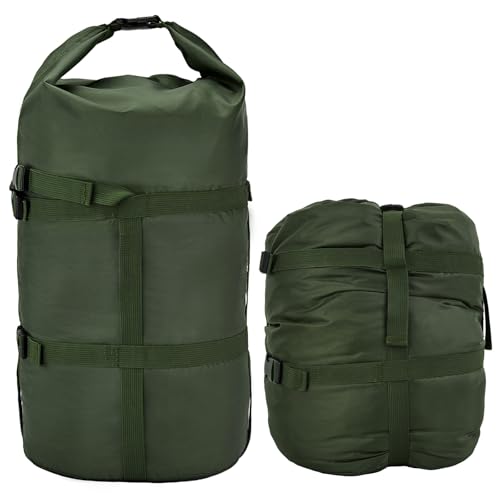
- ✓ Easy four-strap compression
- ✓ Lightweight nylon build
- ✓ Compact when stored
- ✕ Size varies by item
- ✕ Not for rigid gear
| Capacity | 45 L |
| Packed Size (Approx.) | 24.5 x 12 x 12 inches |
| Material | Nylon fabric with webbing straps |
| Closure/Compression System | 4 adjustable straps for compression |
| Intended Use | Soft gear (sleeping bags, blankets, jackets, clothing); not suitable for rigid/hard-sided equipment |
| Packaging | 1-pack compression stuff sack (sleeper bag and gear not included) |
The first thing that grabbed me is how little space this 45L sack takes up when you’re not using it, yet it aggressively shrinks bulky down items once you start tightening the four straps. I hopped a sleeping bag into it and watched the bulbous lump flatten into something unmistakably backpack-friendly.
The fabric felt sturdy enough for a few seasons of weekend trips, and the green color looks like it’ll hide dirt better than brighter shades.
The four-strap system is the real win here. You can dial in the compression without fumbling with complicated buckles, which is perfect after a long hike when you just want to seal things up and go.
I appreciated how the straps hold their tension, so the bag doesn’t loosen and puff back out mid-commute. The size hint is helpful, too—measure your gear first so you know you’re not overestimating what will fit.
Handling the sack is straightforward: unzip, drop in the bag, cinch, and roll. The nylon feels pliable enough to stuff into a corner of a pack, but sturdy enough to resist tearing if you unintentionally press against rocky terrain.
It’s clearly intended for soft gear like sleeping bags and jackets, not something rigid, which matches my experience using it with a down bag on damp mornings.
If you’re chasing a tidy pack or a little more order in a crowded backpack, this 45L sack delivers. It’s light, reliable, and simple to adjust on the fly.
The only caveat is the need to verify size for your specific items, because fill and shape do matter on how compact you’ll get.
Overall, this is a practical, no-nonsense compression sack that earns its keep in real-world camping trips.
What Makes a Compression Sack Essential for Down Sleeping Bags?
A compression sack is essential for down sleeping bags as it maximizes space and maintains the integrity of the insulation. The best features to consider include:
- Size and Capacity: The size of the compression sack should match the sleeping bag’s volume, allowing for efficient packing without damaging the down. A well-sized sack ensures that the sleeping bag can be compressed adequately to fit into a backpack or storage area.
- Material: High-quality, durable materials such as nylon or polyester are preferred as they offer water resistance and longevity. The material should also be lightweight to avoid adding unnecessary bulk to your gear.
- Compression System: Look for a compression sack with a reliable system, often utilizing straps or a roll-top design. These features allow you to easily adjust the size of the sack, compressing the sleeping bag to the desired volume while also securing it effectively.
- Weight: The weight of the compression sack itself is important, especially for backpackers seeking to minimize pack weight. A lightweight sack ensures that more of your weight allowance can be dedicated to other essential gear.
- Breathability: Some compression sacks have breathable panels that allow moisture to escape, which is crucial for maintaining the loft of down insulation. This feature prevents the down from becoming damp and losing its insulating properties during travel.
- Accessibility: A good compression sack should have an easy-access opening that allows for quick packing and unpacking. Features like wide openings or top-loading designs can enhance convenience, especially in outdoor settings.
How Does a Compression Sack Work to Protect Down Sleeping Bags?
Ventilation Features: Some compression sacks come with breathable mesh panels or strategic ventilation features that allow moisture from the sleeping bag to escape. This is crucial in preventing mold and mildew, especially during extended trips where the sleeping bag may be stored in the sack for long periods.
What Key Features Should You Consider When Choosing a Compression Sack?
When choosing the best compression sack for a down sleeping bag, several key features should be taken into account:
- Material: The material of the compression sack should be durable yet lightweight, typically nylon or polyester is preferred for their resistance to wear and tear. Additionally, a water-resistant or waterproof material can help protect the sleeping bag from moisture during storage or transport.
- Size: It’s important to choose the right size compression sack that matches the volume of your down sleeping bag. A sack that is too small can cause strain on the sleeping bag, while one that is too large may not compress it effectively, leading to unnecessary bulk.
- Compression Ratio: The compression ratio indicates how much the sack can reduce the volume of the sleeping bag. A higher compression ratio allows for more effective packing, making it easier to fit in your backpack or luggage, which is especially beneficial for backpackers and travelers.
- Closure System: Look for a reliable closure system, such as a roll-top or drawstring, that securely seals the sack and prevents the sleeping bag from spilling out. A good closure system not only enhances compression but also provides added protection against dirt and moisture.
- Weight: The weight of the compression sack itself should be minimal to avoid adding unnecessary bulk to your gear. Lightweight options help ensure that your overall pack weight remains manageable, which is crucial for long hikes or trips.
- Ventilation: Some compression sacks come with built-in ventilation features, which can help prevent moisture buildup and mold in your down sleeping bag. Proper ventilation is essential for maintaining the integrity of the down insulation and extending the life of your sleeping bag.
- Versatility: Consider whether the compression sack can be used for other purposes, such as storing clothes or gear, which can add to its functionality. A versatile compression sack can be a valuable addition to your camping or travel gear, providing various storage solutions.
How Does Material Affect the Performance of a Compression Sack for Down Sleeping Bags?
The material of a compression sack significantly influences its performance, durability, and functionality for down sleeping bags.
- Nylon: Nylon is a popular choice for compression sacks due to its lightweight and durable nature. It provides excellent resistance to wear and tear, making it suitable for outdoor use, while also being water-resistant to protect the down insulation from moisture.
- Ripstop Fabric: Ripstop fabric is engineered to prevent tearing and ripping, which is particularly beneficial for compression sacks that may undergo rough handling. This material adds an extra layer of durability, ensuring the sack maintains its integrity over time, even in strenuous conditions.
- Silnylon: Silnylon is a blend of silicone and nylon, resulting in a fabric that is both lightweight and highly water-resistant. Its low weight helps minimize the overall pack size, making it ideal for backpackers, while its resistance to moisture protects the down sleeping bag from dampness.
- Polyester: Polyester is another common material used in compression sacks, known for its durability and UV resistance. While it may not be as lightweight as nylon, it offers good water resistance and is often more affordable, making it a suitable option for budget-conscious campers.
- Coated Fabrics: Some compression sacks utilize coated fabrics to enhance their water resistance and protection against the elements. These coatings can provide additional waterproofing, which is crucial when storing down sleeping bags in varying weather conditions.
What Size Compression Sack is Suitable for Your Down Sleeping Bag?
Selecting the right size compression sack for your down sleeping bag is crucial for optimizing space and protecting your gear.
- Small Compression Sack (5-10 liters): Ideal for lightweight down sleeping bags designed for summer or warm-weather camping, these sacks effectively compress the bag without excessive pressure.
- Medium Compression Sack (10-15 liters): Suitable for three-season down sleeping bags, this size offers a balance between compactness and protection, allowing for some room while still compressing adequately for backpacking.
- Large Compression Sack (15-25 liters): Best for winter down sleeping bags, these sacks provide ample space for thicker insulation, ensuring that the bag maintains its loft and warmth while still being manageable to carry.
- Extra-Large Compression Sack (25+ liters): Designed for bulky or multiple sleeping bags, these sacks are perfect for family camping or longer trips where space is less of a concern, allowing for the storage of additional gear alongside the sleeping bag.
The small compression sack, typically ranging from 5 to 10 liters, is perfect for summer or lightweight bags. It allows for a snug fit without over-compressing the down, which can cause damage and reduce insulation effectiveness.
Medium compression sacks, around 10 to 15 liters, are versatile and can comfortably hold three-season sleeping bags. This size strikes a good balance between compactness and preserving the bag’s insulation, making it suitable for most backpacking trips.
For winter camping, a large compression sack of 15 to 25 liters is necessary to accommodate the thicker insulation found in winter sleeping bags. This size ensures that the bag can be compressed for transport while retaining its loft and warmth capabilities.
Extra-large compression sacks, starting from 25 liters and above, are ideal for families or group camping situations. They provide enough space for bulky sleeping bags or multiple sleeping bags, making them less suited for ultralight backpacking but perfect for car camping or long-term outdoor stays.
What are Some of the Best-Rated Compression Sacks for Down Sleeping Bags?
Some of the best-rated compression sacks for down sleeping bags include:
- Sea to Summit Ultra-Sil Compression Sack: This lightweight option is made from high-tenacity nylon and features a unique design that allows for easy packing and maximum compression. Its roll-top closure ensures a watertight seal, making it suitable for various outdoor conditions.
- REI Co-op Flash Compression Dry Sack: Known for its durability and waterproof capabilities, this compression sack is perfect for keeping your down sleeping bag dry and protected. The adjustable straps allow for a tight fit, which helps minimize bulk while maximizing space in your backpack.
- Outdoor Research Compressible Sack: This versatile sack is designed with a soft, breathable fabric that allows for easy stuffing and compression. It features a drawcord closure for secure packing and is great for both storage and travel, providing excellent protection for your down sleeping bag.
- Big Agnes Compression Sack: With its innovative design and robust materials, this compression sack effectively reduces the volume of your sleeping bag while ensuring it remains dry and protected. The top and bottom compression straps make it easy to adjust the size to fit your backpack perfectly.
- Hyperlite Mountain Gear Stuff Sack: Made from Dyneema fabric, this ultra-lightweight sack is both waterproof and incredibly strong, making it ideal for backpackers looking to save weight. The unique design allows for easy access to your sleeping bag while providing excellent compressibility and storage efficiency.
Which Brands Produce the Most Reliable Compression Sacks?
The brands known for producing the most reliable compression sacks for down sleeping bags include:
- Sea to Summit: Renowned for their high-quality materials and innovative designs, Sea to Summit compression sacks often feature durable fabrics and robust buckles.
- REI Co-op: Offering a range of affordable yet reliable options, REI Co-op compression sacks are designed with functionality in mind, providing excellent compression without sacrificing durability.
- Osprey: Osprey compression sacks are known for their attention to detail and ergonomic designs, ensuring that your sleeping bag is efficiently compressed while remaining protected from moisture.
- Big Agnes: Big Agnes is popular among outdoor enthusiasts for their lightweight and compact compression sacks, which are ideal for maximizing space in your backpack while keeping your down sleeping bag secure.
- Granite Gear: Recognized for their ultralight options, Granite Gear compression sacks are made from high-tenacity nylon and often feature a roll-top closure, making them an excellent choice for minimalist backpackers.
Sea to Summit compression sacks utilize high-quality materials and innovative designs, often incorporating features like a drawcord and side-release buckles for enhanced compression capabilities. Their Ultra-Sil series, in particular, is favored for its lightweight yet durable construction, making it ideal for backpacking.
REI Co-op’s compression sacks are a great choice for budget-conscious consumers who still want reliability. Their sacks typically incorporate a variety of sizes and compression ratios, allowing for optimal packing without compromising on the bag’s insulation properties.
Osprey’s compression sacks are designed with user comfort in mind, featuring a streamlined shape that fits snugly in most backpacks. Their use of moisture-resistant materials ensures that your down sleeping bag stays dry during wet conditions.
Big Agnes compression sacks are particularly valued for their lightweight design, which allows backpackers to save weight while ensuring their gear is efficiently packed. They often include features such as adjustable straps and a unique shape that enhances compressibility.
Granite Gear compression sacks are aimed at ultralight hikers, offering minimal weight without sacrificing durability. Their roll-top design allows for easy access and packing, and the high-tenacity nylon fabric is resistant to wear and tear, making them a long-lasting choice for outdoor adventures.
What Are the Advantages and Disadvantages of Using Compression Sacks for Down Sleeping Bags?
| Aspects | Advantages | Disadvantages |
|---|---|---|
| Space Efficiency | Reduces the volume of sleeping bags, making them easier to pack and carry. | Can compress insulation too much, reducing the bag’s warmth and loft. |
| Weight | Generally lightweight, contributing to a lighter overall pack weight. | Some models may add unnecessary weight compared to standard storage options. |
| Durability | Can protect sleeping bags from dirt and moisture during travel. | May wear out faster if made from lower quality materials, leading to potential failure. |
| Versatility | Can be used for other gear, not just sleeping bags, maximizing utility. | Over-compression might damage other gear if not used properly. |
| Specific Examples | Sea to Summit Ultra-Sil Compression Sack, REI Co-op Flash Compression Sack | None |
| Impact on Insulation | Proper compression maintains the integrity of down insulation. | Excessive compression can lead to loss of insulation efficiency. |
| Price Range | Typically ranges from $20 to $60, depending on brand and features. | Higher-end models can be significantly more expensive than traditional storage options. |
| Size Options | Available in various sizes to accommodate different sleeping bag types. | Choosing the wrong size may lead to inadequate compression or excess bulk. |
How Can Proper Use of a Compression Sack Enhance the Lifespan of Your Down Sleeping Bag?
Using a compression sack correctly can significantly improve the longevity of your down sleeping bag by preventing damage and maintaining its insulation properties.
- Prevents Compression Damage: Over-compressing down sleeping bags can lead to permanent damage to the down fill. By using a compression sack designed for down bags, you can minimize the pressure on the insulation while still effectively reducing the overall size for storage or transport.
- Moisture Control: Some compression sacks feature moisture-wicking materials that help keep your sleeping bag dry. This is important because moisture can clump down feathers together, reducing their loft and insulating ability, so a good compression sack can help maintain the bag’s performance.
- Organizational Benefits: A compression sack helps keep your sleeping bag compact and organized within your backpack. This not only maximizes space but also allows for easier packing and unpacking, which can prevent accidental abrasions or damage to the sleeping bag during your outdoor adventures.
- Durability and Protection: High-quality compression sacks are made from durable, tear-resistant materials that can protect your sleeping bag from external elements. This shielding from dirt, moisture, and UV light helps extend the lifespan of your down sleeping bag, ensuring it remains in optimal condition for many trips.
- Ease of Use: Compression sacks often come with user-friendly features such as multiple straps and buckles that make it easy to compress your sleeping bag efficiently. A well-designed compression sack allows for quick packing and unpacking, which is especially helpful in changing weather conditions or during quick stopovers on long trips.