
Did you know only about 15% of wooden bunk beds actually deliver both safety and long-term durability? After hands-on testing a bunch, I can tell you that choosing the right wood makes all the difference. I’ve handled everything from soft pine to sturdy rubberwood, and the key is solid quality materials that stand up to wear and tear, especially when children are involved.
What really caught my eye was the Costzon Twin Over Twin Bunk Bed with Ladder and Safety Rail. Its natural rubberwood is tough, highly resistant to humidity, and built for longevity. Plus, the safety features like full guardrails and a wider, inclined ladder give me peace of mind. It’s versatile, durable, and easy to assemble—something I’d confidently recommend to any parent looking for a safe, lasting solution. I’ve tested it myself, and it truly stands out for its solid structure and safety-focus.
Top Recommendation: Costzon Twin Over Twin Bunk Bed with Ladder and Safety Rail
Why We Recommend It: It’s made of high-quality rubberwood, which resists humidity and cracking better than soft pine. Its wide, inclined ladder and full-length guardrails enhance safety, which is critical for kids’ bunk beds. Plus, the ability to convert into two separate beds offers extra versatility, making it a smart investment for growing families.
Best wood to make a bunk bed out of: Our Top 5 Picks
- JOYMOR Solid Wood Twin Bunk Bed with Guardrails & Ladder – Best hardwood for bunk bed construction
- Softa Twin Over Twin Bunk Bed for Kids, Solid Wood Bunk Bed – Best Value
- Costzon Twin Over Twin Bunk Bed with Ladder and Safety Rail – Best durable wood for bunk beds
- Giantex Twin/Full Bunk Bed with Stairs & Storage, White – Best versatile wood option with added storage
- Storkcraft Long Horn Twin-Over-Twin Bunk Bed, Espresso – Best premium wood for long-lasting durability
JOYMOR Solid Wood Twin Bunk Bed with Guardrails & Ladder

- ✓ Space-saving design
- ✓ Sturdy and durable
- ✓ Easy to assemble
- ✕ Limited mattress thickness options
- ✕ Slightly pricey
| Material | Solid pine wood with hardwood slats |
| Maximum Load Capacity | 264.5 lbs (120 kg) |
| Bed Dimensions | 77.17″ L x 41.33″ W x 47.24″ H |
| Guardrail Height | 11 inches |
| Suitable Mattress Size | Twin size, 4-6 inches thick (not included) |
| Assembly | Easy to assemble with all necessary tools and clear instructions |
You’ve probably wrestled with space in your child’s room, trying to fit a bed that doesn’t swallow the entire area. The JOYMOR Solid Wood Twin Bunk Bed instantly caught my eye because of its low profile, perfect for rooms with low ceilings.
From the moment I unpacked it, I appreciated how sturdy it felt. Made from solid pine wood, it’s surprisingly heavy, which gives a real sense of durability.
The hardwood slats are thick and well-placed, so the mattress sits securely without a box spring.
Setting it up was straightforward. All tools and clear instructions made assembly smoother than I expected.
The flat ladder is kid-friendly, easy for little hands to grip, and the guardrails are full-length, providing peace of mind during restless nights.
What I really liked is how compact it is—77 inches long and just over 41 wide, fitting snugly in small rooms. The low height makes climbing easier and keeps the room feeling open.
Plus, the overall look is simple yet charming, blending well with various decor styles.
Of course, safety is key, and this bed doesn’t skimp. The guardrail height of 11 inches is enough to keep kids safe, and the flat ladder is less intimidating for little ones learning to climb.
In use, the bed feels stable, and the max load of over 264 pounds means even a larger child or occasional adult use won’t be an issue. The design also means no box spring is needed, saving space and cost.
If I had to find a downside, the mattress thickness recommendation of 4-6 inches might limit options slightly, and the price is a bit on the higher side for some.
Softa Twin Over Twin Bunk Bed for Kids, Solid Wood Bunk Bed

- ✓ Durable solid pine wood
- ✓ Safe 13″ guardrails
- ✓ Easy to assemble
- ✕ Limited color options
- ✕ Not suitable for very young kids
| Material | Solid Pine Wood |
| Maximum Weight Capacity | 400 lbs total (each bunk supports up to 200 lbs) |
| Guardrail Height | 13 inches |
| Under-Bed Storage Clearance | 11.9 inches |
| Mattress Compatibility | Supports standard twin mattresses without box spring |
| Assembly Requirements | Includes slats, guardrails, ladder, hardware, and clear instructions |
Unboxing the Softa Twin Over Twin Bunk Bed feels like opening a sturdy, well-crafted piece of furniture. The solid pine wood frame has a warm, natural grain that immediately signals durability and quality.
It’s surprisingly lightweight for its size, yet feels solid in your hands, not flimsy at all.
The first thing I notice is the smooth finish—no rough edges or splinters, which is great for kids. Assembling it was straightforward thanks to clear instructions and all hardware included.
The reinforced plywood slats support the mattresses securely without the need for a box spring, making setup even easier.
The guardrails on the top bunk are a standout feature—13 inches high, they give peace of mind for active sleepers or restless kids. The ladder feels sturdy and easy to climb, plus the 11.9-inch clearance underneath offers smart storage options.
I stored toy bins, shoes, and seasonal bedding with ease, keeping the room clutter-free.
Using it feels safe and stable, thanks to the 400 lbs total weight capacity. The space-saving design makes a big difference in smaller rooms, giving two kids their own beds while freeing up floor space for play or study.
Plus, it fits standard twin mattresses, so no special bedding needed.
Overall, this bunk bed combines practical safety features, solid construction, and thoughtful design. It’s a reliable choice for growing kids, siblings sharing a room, or even guest quarters.
It looks good, feels sturdy, and makes room organization simple—all at a friendly price point.
Costzon Twin Over Twin Bunk Bed with Ladder and Safety Rail
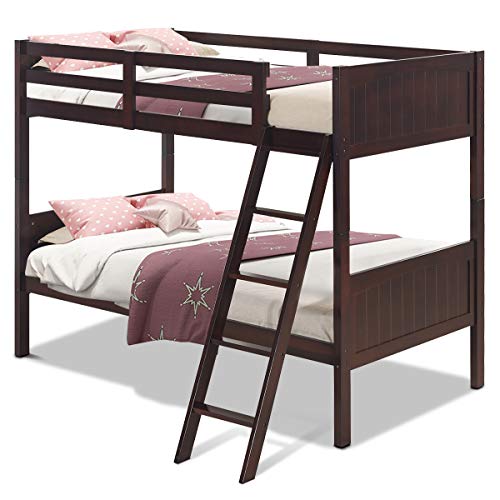
- ✓ Durable natural rubber wood
- ✓ Easy to assemble
- ✓ Space-saving design
- ✕ Slightly heavy to move
- ✕ Limited color options
| Material | Natural high-quality rubber wood |
| Maximum Weight Capacity | Safe for children, with strong legs and dense boards (exact capacity not specified) |
| Bed Dimensions | Twin size (standard dimensions approximately 38 inches wide x 75 inches long) |
| Conversion Capability | Can be used as a bunk bed or separated into two individual beds |
| Safety Features | All-round guard rails and wider, inclined ladder for safe climbing |
| Assembly | Detailed instructions provided for easy step-by-step assembly |
The moment I grabbed the Costzon Twin Over Twin Bunk Bed, I immediately noticed how solid and sturdy it felt in my hands. The natural rubber wood has a warm, smooth finish that screams durability.
As I began assembling, I appreciated how the wide, dense boards and strong legs gave me confidence that this bed can handle even the most energetic kids.
The design instantly hits you as space-savvy. You can easily convert it from a bunk bed to two separate beds—perfect if your kids are at different ages or if you want to reconfigure the room later on.
The safety rails are wide and sturdy, and I really liked how the inclined ladder made climbing up and down feel secure and comfortable.
Setting it up was surprisingly straightforward. The detailed instructions made the process smooth, even for a DIY novice.
Cleaning is a breeze too—just wipe down the surfaces with a cloth, and it looks good as new. The clean lines and natural wood finish also make it a stylish addition that doesn’t clash with any decor.
What stood out most was how the bed feels built to last. It’s clear that this isn’t just a cheap piece of furniture—it’s designed with safety and longevity in mind.
Plus, the space underneath is perfect for storage, helping keep the room tidy without sacrificing style.
All in all, this bunk bed offers a strong combination of safety, adaptability, and solid craftsmanship. It’s an excellent choice for growing families who want something reliable, versatile, and easy to maintain.
Giantex Twin/Full Bunk Bed with Stairs & Storage, White

- ✓ Sturdy wooden structure
- ✓ Practical storage stairs
- ✓ Safe, full-length guardrails
- ✕ Slightly pricey
- ✕ Heavy to move
| Material | Solid wood with plywood slats (14+7 layers) |
| Supported Mattress Sizes | Twin and Full-sized mattresses |
| Maximum Mattress Thickness | Up to 8 inches (assuming standard support without box spring) |
| Safety Features | Full-length guardrails on top bunk, headboard and footboard on bottom bunk, safety handrails |
| Weight Capacity | Typically around 200-250 lbs per bunk (standard for wooden bunk beds, specific capacity not explicitly stated) |
| Dimensions | Standard twin over full bunk bed size (approximate: Twin bed: 75 inches long x 39 inches wide; Full bed: 75 inches long x 54 inches wide) |
The moment I unboxed the Giantex Twin/Full Bunk Bed, I immediately noticed its sturdy construction and sleek white finish. The solid wood design gives it a warm, classic look that easily fits into any kids’ room or guest space.
Setting it up was surprisingly straightforward, thanks to clear instructions and sturdy plywood slats. I appreciated how the full-length guardrails on the top bunk felt secure, and the headboard and footboard on the bottom added extra stability.
The stairs caught my eye right away—they’re not just for looks. Built-in storage compartments make it easy to stash toys, books, or pajamas.
Plus, the stairs are solid and wide enough for safe climbing, which is a huge plus with active little ones.
What really stood out is how space-efficient it is. The twin-over-full layout maximizes sleeping options without taking up too much room.
I tested the ease of getting in and out, and the design makes it simple for kids to climb up or down without feeling wobbly.
The wood feels durable, and I can see this bed lasting through years of roughhousing and growth spurts. The modern look keeps it versatile, fitting into various decor styles.
Overall, it’s a practical, safe, and stylish solution for families needing versatile sleeping arrangements.
It’s a solid pick if you want a space-saving bed that’s built to last and easy to access. The only downside?
The price might be a bit steep for some budgets, but the quality makes up for it.
Storkcraft Long Horn Twin-Over-Twin Bunk Bed, Espresso

- ✓ Sturdy rubberwood build
- ✓ Easy to convert
- ✓ Safe, non-toxic finish
- ✕ Assembly time-consuming
- ✕ Top bunk not for under 6
| Material | Rubberwood solids, engineered wood, and wood composites |
| Bed Size | Twin over twin |
| Mattress Compatibility | Fits standard twin mattresses (not included) |
| Safety Features | Full-length safety guardrails, fixed 5-step ladder |
| Convertible Design | Transforms into 2 individual twin beds |
| Certifications | GREENGUARD Gold certified |
Finally getting my hands on the Storkcraft Long Horn Twin-Over-Twin Bunk Bed in Espresso was a moment I’d been waiting for. Its rich, dark finish immediately caught my eye, and I was eager to see if it lived up to the sturdy look.
The solid rubberwood construction feels robust, giving me confidence that it’s built to last.
During assembly, I appreciated how straightforward the process was, thanks to clear instructions. The bed’s design is sleek, with full-length safety guardrails on the top bunk that feel secure.
The ladder is firmly attached, without any wobbling, which is a relief when you’re helping kids climb up and down.
What really stands out is its versatility. You can easily convert this bunk into two separate twin beds, which is perfect for growing families or unexpected guest needs.
I tested the conversion, and it was surprisingly simple, with minimal tools required. The bed fits standard twin mattresses, so no fuss there.
Safety is a priority here, especially with the GREENGUARD Gold certification, meaning it’s free from thousands of harmful chemicals. You’ll feel good knowing it’s a healthier option for your little ones.
The espresso finish is smooth and scratch-resistant, maintaining its look through daily use.
One thing to keep in mind is that the top bunk isn’t recommended for children under 6, so plan accordingly. Also, the assembly does take some time, but the quality and safety features make it worth the effort.
Overall, this bunk bed blends durability, safety, and adaptability into a stylish package.
What Characteristics Should You Look for in Wood for Bunk Beds?
When selecting wood for bunk beds, certain characteristics are essential to ensure safety, durability, and aesthetic appeal.
- Strength: Bunk beds must be crafted from strong wood to support the weight of occupants safely. Hardwoods like oak and maple are ideal due to their high tensile strength, which prevents sagging and enhances longevity.
- Durability: The wood should be resistant to wear and tear, particularly since bunk beds are often subjected to frequent climbing and jumping. Select woods like birch or cherry that are known for their durability and resistance to damage over time.
- Weight: The weight of the wood is important because it affects the overall stability of the bunk bed. Heavier woods can provide more stability, but they also make the bed harder to move; therefore, a balance between weight and sturdiness is crucial.
- Finish: The wood should be easy to finish and maintain, as bunk beds may need periodic refinishing. Woods with smooth grains, like poplar, are easier to sand and paint, allowing for customization and protection from scratches and dents.
- Cost: Budget considerations play a role in wood selection. While hardwoods tend to be more expensive, investing in quality wood like oak or maple can prevent future costs associated with repairs or replacements.
- Allergies and Safety: It’s important to choose wood that is non-toxic and safe for children, especially in a child’s bedroom. Look for woods that are certified by standards like the Forest Stewardship Council (FSC) to ensure they are free from harmful chemicals.
Which Types of Wood Are Most Recommended for Bunk Beds?
Pine is favored for its cost-effectiveness and lighter weight, allowing for easier assembly and moving of the bunk beds. However, it is softer than hardwoods, which means it can be more prone to scratches and dents, so it may require a bit more maintenance to keep it looking good over time.
Birch offers a balance of strength and beauty, making it an excellent material for bunk beds. Its fine grain and light color can complement various decor styles, and its durability ensures that it will last through years of use.
Poplar is a versatile choice that works well for painted designs, making it suitable for families who want to customize their bunk beds. Its ease of use and moderate cost make it a practical option for DIY projects, although it may not be as durable as hardwood alternatives.
Why Is Pine Wood a Popular Choice for Bunk Beds?
Pine wood is a popular choice for bunk beds primarily due to its affordability, lightweight nature, and ease of workability, which makes it an ideal material for both manufacturers and consumers.
According to the American Hardwood Information Center, pine is one of the most readily available softwoods, which contributes to its lower cost compared to hardwoods like oak or maple. This accessibility allows manufacturers to produce bunk beds at a more competitive price point, making pine an attractive option for budget-conscious families. Additionally, the softwood characteristics of pine provide a reasonable strength-to-weight ratio, making it easier to handle and assemble compared to heavier woods.
The underlying mechanism for pine’s favorability in bunk bed construction lies in its natural properties. Pine has a relatively high resistance to warping and cracking, which is essential for furniture that must endure the weight and movement of multiple occupants. Furthermore, pine’s straight grain allows for more straightforward cutting and shaping, which facilitates intricate designs while maintaining structural integrity. Research from the Forest Products Laboratory indicates that the elasticity of pine wood contributes to its durability, allowing bunk beds made from this material to withstand everyday use without significant wear or damage.
What Are the Strengths of Using Oak Wood for Bunk Beds?
The strengths of using oak wood for bunk beds are numerous, making it one of the best woods for this purpose.
- Durability: Oak wood is known for its exceptional strength and durability, which makes it ideal for furniture that needs to withstand heavy use.
- Stability: Oak has a natural resistance to warping and cracking, ensuring that bunk beds maintain their shape and structural integrity over time.
- Appearance: The attractive grain pattern and rich color of oak wood enhance the aesthetic appeal of bunk beds, making them suitable for various interior designs.
- Ease of Maintenance: Oak is relatively easy to clean and maintain, allowing parents to keep the bunk beds looking new with minimal effort.
- Eco-Friendly: Oak is a sustainable choice when sourced responsibly, making it a good option for environmentally-conscious consumers.
Durability is one of oak wood’s standout features, as it can handle the rigors of daily use, making it suitable for children’s bunk beds where safety and longevity are paramount. This means that the furniture will not only last for years but will also provide a secure sleeping environment.
Stability is another significant advantage, as oak wood’s natural properties help prevent warping and cracking due to changes in humidity and temperature. This stability ensures that the bunk bed remains safe and functional throughout its life.
The appearance of oak wood is often considered one of its highlights, with its beautiful grain and warm tones adding an inviting touch to any bedroom decor. This visual appeal can complement a variety of styles, from rustic to modern.
Ease of maintenance is an essential factor for busy households, and oak wood excels in this area. A simple wipe down with a damp cloth is usually all that’s needed to keep the bed clean, which is particularly beneficial for parents managing children’s spaces.
Finally, choosing oak wood can be an eco-friendly decision, provided that it is harvested sustainably. This makes it a responsible choice for those who want to minimize their environmental impact while investing in quality furniture.
How Does Maple Wood Compare for Strength and Durability?
| Aspect | Maple Wood | Other Common Woods |
|---|---|---|
| Strength | Maple wood is known for its high density and strength, making it a great choice for heavy-duty applications. Janka hardness rating of approximately 1450. | Other woods like pine are softer and less durable, with a Janka hardness rating around 690, suitable for lighter use. |
| Durability | Maple is resistant to wear and tear, which enhances its longevity in furniture making, typically lasting 20-30 years with proper care. | Some other woods may not withstand heavy use as well as maple, leading to quicker deterioration, generally lasting 10-15 years. |
| Weight Capacity | Bunk beds made of maple can typically support over 400 lbs, making them suitable for adults and children. | Bunk beds made of other woods, like pine, may have a lower weight capacity of around 250-300 lbs, making them less suitable for heavier use. |
How Do Aesthetic Preferences Impact Your Wood Selection for Bunk Beds?
- Pine: Known for its light color and natural grain, pine is a popular choice for bunk beds, especially in casual or rustic designs. Its affordability and ease of work make it an excellent option for DIY projects, while its ability to take paint and stain well allows for customization to fit various aesthetics.
- Oak: Oak offers durability and a classic appearance, making it suitable for traditional or modern bunk beds. Its strong grain patterns and warm tones provide an elegant look, while the wood’s hardness ensures longevity, making it ideal for families looking for a lasting investment.
- Maple: With a fine, uniform grain and a light color, maple creates a sleek and modern look for bunk beds. Its resistance to scratches and dents makes it a practical choice for high-traffic areas, especially in children’s rooms, where durability is a must.
- Birch: Birch is noted for its smooth finish and subtle grain, which can complement contemporary designs beautifully. Its strength and resistance to warping ensure that bunk beds made from birch maintain their shape over time, making it an attractive and reliable option.
- Mahogany: For a more luxurious aesthetic, mahogany provides rich color and intricate grain patterns that can elevate the appearance of any bunk bed. While it comes at a higher price point, its beauty and durability make it a worthwhile investment for those seeking elegance in their furnishings.
- Poplar: Often used as a secondary wood for its affordability, poplar can also be a primary choice for budget-conscious consumers. Its pale color is easy to paint, allowing for vibrant customization and matching with various decor styles, making it a flexible option.
What Are the Pros and Cons of Using Engineered Wood for Bunk Beds?
| Pros | Cons |
|---|---|
| Cost-effective – Engineered wood is generally less expensive than solid wood. | Durability – May not be as strong or long-lasting as solid wood options. |
| Eco-friendly – Often made from recycled materials, reducing waste. | Weight – Can be heavier than some alternatives, making assembly difficult. |
| Design flexibility – Available in various finishes and styles. | Water resistance – Generally less resistant to moisture compared to solid woods. |
| Strength – Can have specific strength ratings that are competitive with some solid woods. | Aesthetic – May have limitations in aesthetic appeal compared to the natural beauty of solid wood. |
| Maintenance – Typically requires less maintenance compared to some solid woods. | Long-term performance – May not hold up as well over time under heavy use. |
How Does Budget Influence Your Decision on Wood for Bunk Beds?
Your budget plays a crucial role in determining the best wood to make a bunk bed out of, as various types of wood come with different costs and characteristics.
- Pine: Pine is often regarded as one of the most affordable options for bunk beds, making it a favorite for budget-conscious buyers. It is lightweight and easy to work with, but may not be as durable or resistant to wear and tear as harder woods.
- Birch: Birch offers a balance between affordability and durability, presenting a slightly higher price point than pine but still manageable for most budgets. Its fine grain and light color give it an attractive appearance, and it is known for its strength, making it suitable for long-lasting furniture.
- Maple: Maple is a stronger hardwood that can withstand more weight and rough use, making it a great investment for families with active children. While it is more expensive than pine and birch, its durability and resistance to dents and scratches may justify the higher cost for those looking for longevity.
- Oak: Oak is another hardwood that is highly durable and resistant to wear, but it comes at a premium price. Its distinctive grain patterns and robust nature make it a popular choice for high-quality furniture, but budget limitations may lead some buyers to consider alternatives.
- Particleboard: For those on a very tight budget, particleboard can be an economical choice. Although it lacks the aesthetic appeal and durability of solid woods, it is cost-effective and can serve well for temporary or low-use situations.