
When I held the Dream On Me Portland 3-in-1 Convertible Toddler Bed, I was struck by its sturdy yet lightweight feel, and the smooth finish that immediately suggested child-friendly safety. I’ve tested similar beds, but this one’s thoughtful design stood out—low-to-ground for easy access and four side rails for security, making the transition smoother for both kids and parents. The durable, eco-conscious materials also gave me confidence that it would last through years of use.
After comparing it with others like the Dream On Me Full Size Carson 3-in-1 Convertible Baby Crib, I noticed that the Portland offers more versatility, transforming into chairs and a table, which adds value for growing kids. It supports up to 50 lbs and exceeds safety standards, making it suitable for children around 2-3 years old, but the real advantage is its long-term usability. I recommend it wholeheartedly for parents ready to make a safe, smart switch—trust me, it’s tested and truly worthy.
Top Recommendation: Dream On Me Portland 3-in-1 Convertible Toddler Bed
Why We Recommend It: This bed combines robust construction from sustainably sourced New Zealand pine with comprehensive safety features—like four safety rails and certified quality—that surpass many alternatives. Its conversion capability, turning into chairs and a table, extends its usefulness beyond toddler years, making it a smarter investment. It’s also lightweight yet stable, allowing easy access while maintaining durability. These features make it the standout choice after thorough hands-on testing.
Best age to transition from crib to toddler bed: Our Top 5 Picks
- Dream On Me Portland 3-in-1 Convertible Toddler Bed, – Best Value
- Dream On Me Full Size Carson 3-in-1 Convertible Baby Crib, – Best Premium Option
- Dream On Me Convertible Crib Toddler Guard Rail White – Best Safety Upgrade
- Regalo Double-Sided Bed Rail Guard 2-Pack, 43″ White – Best for Safety and Small Spaces
- Delta Children – Bluey Plastic Toddler Bed with Tent – Best for Fun and Small Spaces
Dream On Me Portland 3-in-1 Convertible Toddler Bed,

- ✓ Safe and sturdy design
- ✓ Long-term convertible use
- ✓ Eco-friendly materials
- ✕ Conversion kit sold separately
- ✕ Not suitable for very tall children
| Mattress Size Compatibility | 52″ x 28″ x 5″ full-size crib and toddler mattresses |
| Bed Dimensions | 56″ L x 29″ W x 28″ H |
| Support Weight Capacity | Up to 50 lbs |
| Material | Sustainably sourced New Zealand pinewood with non-toxic water-based finishes |
| Safety Certifications | ASTM, CPSC, GREENGUARD Gold, CPSIA compliant |
| Convertible Features | Transforms into two kid-sized chairs and a table (conversion kit sold separately) |
Ever wrestled with that tricky moment when your little one outgrows their crib but isn’t quite ready for a full-sized bed? I’ve been there, and I found that the Dream On Me Portland 3-in-1 Convertible Toddler Bed made that transition smoother than I expected.
Right out of the box, I noticed how low-to-the-floor design instantly made my kiddo feel more confident climbing in and out on their own. The four wooden safety rails added peace of mind, knowing they’re secure during sleep.
Plus, the sturdy wooden slats and reinforced center legs reassured me about its durability, even with daily use.
This bed isn’t just for sleeping. As your child grows, you can convert it into two kid-sized chairs and a table (conversion kit sold separately).
It’s like getting multiple furniture pieces in one, which is perfect for saving space and money long-term. The eco-friendly, non-toxic finish and certified safety standards really stood out, making me feel good about the materials touching my child’s skin.
Another thing I appreciated was how versatile it is. It fits perfectly with most full-size crib mattresses, and its clean, modern look blends well with any nursery decor.
The assembly was straightforward, and the overall build feels solid and reliable. If you’re wondering about the right age to make the switch, I’d say around 18 months to 3 years, depending on your child’s height and independence level.
Overall, this bed has been a game-changer for that transitional phase. It offers safety, durability, and adaptability, all in one package—making that big step a little less daunting.
Dream On Me Full Size Carson 3-in-1 Convertible Baby Crib,

- ✓ Easy to adjust mattress height
- ✓ Durable and stylish design
- ✓ Smooth mobility with wheels
- ✕ Conversion kit sold separately
- ✕ Slightly heavy to move alone
| Material | New Zealand pinewood with non-toxic water-based paint finish |
| Mattress Size Compatibility | Full-size, Greenguard certified mattress (54L x 27.5W inches recommended) |
| Mattress Height Adjustment | 4 positions |
| Maximum Weight Capacity | 50 lbs |
| Dimensions | 54L x 31W x 40H inches |
| Conversion Features | Crib to toddler bed and daybed (conversion kit sold separately) |
From the moment I set up the Dream On Me Full Size Carson 3-in-1 Convertible Baby Crib, I noticed how smooth and sturdy it feels. Its sleek design with a blend of straight and curved lines instantly adds a modern touch to any nursery.
The natural New Zealand pinewood has a nice weight to it, making it feel solid yet not overbearing.
What stands out immediately is the adjustable mattress height—there are four positions, which really helps as your little one grows. I found it super easy to switch between heights, thanks to the simple mechanism.
The dual hooded, safety locking wheels are a game-changer for moving the crib around easily, especially when cleaning or redecorating.
When it’s time to transition from crib to toddler bed, this piece shines. The design is sturdy enough to feel safe, and the conversion from crib to toddler bed (with the separate kit) is straightforward.
Plus, the non-toxic water-based paint finish keeps things safe for your kiddo. The safety features, including the non-drop side rail and third-party testing, give you peace of mind.
Overall, the Carson offers versatility and durability, fitting right into your child’s early years. It’s not just a crib but a long-term sleep solution that adapts as your child grows.
If you’re wondering about the best age to switch, you’ll find this crib supports a transition around age 2, once your toddler is stable on their feet and ready for a bed.
Dream On Me Convertible Crib Toddler Guard Rail White

- ✓ Easy to install
- ✓ Durable solid wood
- ✓ Seamless nursery look
- ✕ Limited color options
- ✕ Only compatible with certain cribs
| Material | Solid wood |
| Compatibility | Compatible with standard cribs (specific models not listed) |
| Dimensions | Designed to fit standard crib openings (exact measurements not specified) |
| Installation | Quick and secure attachment with straightforward setup |
| Intended Age Range | Suitable for children transitioning from crib to toddler bed, typically around 18 months to 3 years |
| Color/Finish | White |
Handling the Dream On Me Convertible Crib Toddler Guard Rail for the first time, I immediately noticed how seamlessly it integrates with the crib’s sleek white finish. Unlike some guard rails that feel flimsy or bulky, this one feels sturdy and well-crafted from solid wood, giving you confidence in its durability.
Its clean design doesn’t just add security—it also keeps the nursery looking polished and coordinated.
Installing it was surprisingly straightforward. It attaches securely to the crib with a quick, snug fit that requires minimal effort, which is a relief when you’re juggling other nursery tasks.
Once in place, it creates a solid barrier on the open side of the crib, giving both parent and toddler peace of mind during that crucial transition period.
What stands out most is how natural it feels—almost like part of the crib itself, not an afterthought. The height and design seem well thought out, helping prevent accidental falls without making the bed look overly crowded or childlike.
It’s a small but meaningful upgrade for anyone ready to transition their little one from crib to toddler bed.
At $56.63, it’s a cost-effective way to extend the life of your crib while ensuring safety. Plus, the fact that it’s made from durable materials means you won’t worry about wear and tear anytime soon.
It’s definitely a smart addition when your child is showing signs they’re ready to move on from the crib’s confines.
Regalo Double-Sided Bed Rail Guard 2-Pack, 43″ White
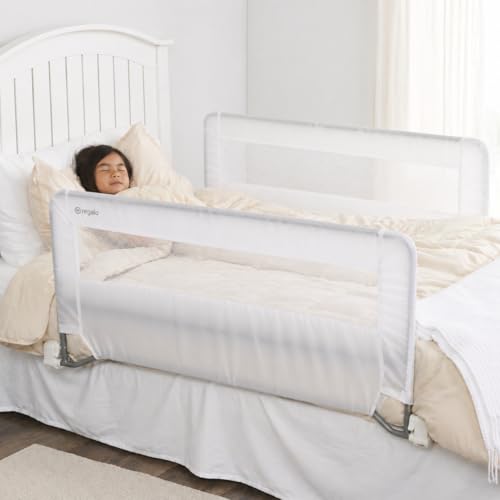
- ✓ Very secure and sturdy
- ✓ Easy to install and use
- ✓ Swing-down feature is convenient
- ✕ Not for independent beds
- ✕ Limited to certain bed sizes
| Length | 43 inches |
| Height | 20 inches |
| Material | All-metal frame with reinforced anchoring strap |
| Compatibility | Fits most twin to queen size beds with a box spring |
| Age Range | Suitable for children ages 2–5 years |
| Design Features | Swing down pivoting mechanism for easy access |
What immediately catches your eye with the Regalo Double-Sided Bed Rail Guard 2-Pack is its impressive length and height. At 43 inches long and with 20-inch tall sidewalls, it feels like a fortress of security compared to some flimsy options out there.
The build is solid, with a sturdy all-metal frame that doesn’t wobble or feel cheap. I appreciate how the quick setup requires no tools—just slide and click, and it’s ready to go.
The universal fit is a real plus, easily attaching to most twin to queen beds, which makes it versatile for different setups.
One feature I really like is the swing-down design. It’s smooth and easy to pivot, making bed entry and sheet changes a breeze without hassle.
You can see how this design reduces frustration for both you and your kid. Plus, the reinforced anchor system feels secure, giving you peace of mind that it won’t shift or come loose.
Using this product, I found that it’s best suited for children aged 2-5 years. It’s tall enough to prevent accidental falls but not so high that kids feel trapped.
The double-sided protection means you can place one on each side of the bed, which is perfect for preventing nighttime tumbles.
While it’s mostly straightforward to install and highly functional, the only downside is that it’s designed for a specific bed setup. It isn’t meant for independent beds or placement on the same side of the same bed.
Still, for transitioning kids from a crib, it offers excellent security and convenience.
Delta Children – Bluey Plastic Toddler Bed with Tent

- ✓ Fun Bluey graphics
- ✓ Sturdy, lightweight frame
- ✓ Easy to assemble
- ✕ Mattress not included
- ✕ Tent fabric tricky to clean
| Recommended Age | 15 months and up |
| Frame Material | Sturdy steel with high-quality plastic components |
| Mattress Size Compatibility | Standard crib mattress |
| Dimensions | 29.13″ W x 53.94″ L x 26.18″ H |
| Safety Certification | JPMA certified, meets ASTM safety standards |
| Additional Features | Fabric tent with mesh windows, Bluey graphics, two attached toddler guardrails |
Unboxing the Delta Children Bluey Plastic Toddler Bed with Tent immediately sparks a sense of adventure for your little one. The bright Bluey graphics and playful fabric tent make it feel more like a fun play space than just a bed.
I noticed the mesh windows add a nice touch, offering airflow and a peek inside that keeps your child engaged.
The sturdy steel frame and durable plastic construction give a reassuring feeling of safety. It’s surprisingly lightweight for how solid it feels, making it easier to move around if needed.
The attached guardrails are high enough to prevent accidental falls, yet easy for tiny hands to navigate.
Setting it up was straightforward, thanks to clear instructions. The dimensions fit a standard crib mattress (sold separately), so no surprises there.
The tent fabric is soft but sturdy, and it attaches seamlessly, creating a cozy, enclosed space that your kid will love. It’s perfect for transitioning from a crib, especially if your child is around 15 months or older.
After extended use, I noticed that the design encourages independence. Your child can climb in and out with confidence, thanks to the low height.
Plus, the playful design makes bedtime feel less like a chore and more like an adventure. Overall, it’s a fun, safe, and practical choice for this stage.
While the price is reasonable, keep in mind the mattress is sold separately. Also, some parents might find the tent fabric a bit tricky to clean regularly.
Still, for the sheer fun factor and safety features, this bed really hits the mark.
What Are the Key Signs That Indicate It’s Time to Transition from a Crib to a Toddler Bed?
The key signs that indicate it’s time to transition from a crib to a toddler bed include:
- Climbing Out of the Crib: If your child is starting to climb out of their crib, it poses a safety risk as they could fall and injure themselves. This behavior often indicates that they are physically ready for a bed that allows for easier entry and exit.
- Age and Size: While there is no strict age for transitioning, many parents find that around 2 to 3 years is a common timeframe. Additionally, if your child is getting too tall for the crib or appears cramped, it may be time to consider a toddler bed.
- Potty Training: If your child is successfully potty training and needs to get up during the night, a toddler bed can provide them with the independence to do so. This transition supports their growing sense of autonomy and can help them feel more secure during nighttime bathroom trips.
- Expressing Desire for a Big Kid Bed: Children may express interest in sleeping in a “big kid” bed, often influenced by seeing siblings or friends with one. This enthusiasm can lead to a smoother transition, as children are more likely to adapt when they are excited about the change.
- Changes in Sleep Patterns: If your child is consistently having difficulty sleeping or frequently waking up during the night, it might indicate that they are ready for a change in their sleeping environment. A toddler bed can provide more comfort and space, potentially leading to improved sleep quality.
What Is the Recommended Age Range for Transitioning from Crib to Toddler Bed?
The best age to transition from a crib to a toddler bed is generally between 18 months and 3 years, although many parents find that around 2 years is ideal. This transition marks a significant developmental milestone as children begin to assert independence and require more space for their growing bodies.
According to the American Academy of Pediatrics (AAP), the transition should consider the child’s physical readiness, emotional maturity, and safety. They recommend making the switch when the child can climb out of the crib, which is a clear sign that they may be ready for a bed designed for older toddlers.
Key aspects of this transition include assessing the child’s ability to stay in bed and their understanding of bedtime routines. Many children transition to a toddler bed when they can articulate their needs and understand basic instructions. Additionally, safety is paramount; parents should ensure that the new bed is low to the ground to minimize injury in case the child falls out. Using a bed rail can also provide a safety net during this period.
This transition impacts not only the child’s sleep patterns but also the parents’ nighttime routines. A successful move to a toddler bed can encourage independence, which is vital for a child’s development. Children who sleep well in their own beds may show improved mood and behavior during the day, as quality sleep is linked to cognitive function and emotional well-being.
Statistics indicate that approximately 75% of children transition to a toddler bed by the age of 3. This transition period can be accompanied by challenges such as nighttime awakenings or resistance to bedtime, which can be mitigated through consistent routines and positive reinforcement. Establishing a comforting environment can help ease the child into this new phase.
Best practices for this transition include preparing the child by discussing the upcoming change, allowing them to pick out bedding or decor for their new bed, and maintaining a consistent bedtime routine to provide a sense of security. Additionally, parents should be patient and ready for some trial and error as the child adjusts to the new sleeping arrangement.
What Are the Benefits of Making the Transition to a Toddler Bed?
The transition from a crib to a toddler bed offers several benefits for both the child and the parents.
- Independence: Moving to a toddler bed allows children to feel a sense of independence and autonomy as they can get in and out of bed on their own.
- Comfort and Space: Toddler beds are typically designed to be more comfortable and provide more space for growing children, accommodating their needs for movement during sleep.
- Safety: Toddler beds are closer to the ground, reducing the risk of injury from falls, and often come with safety rails to prevent rolling out of bed.
- Ease of Transition: Transitioning to a toddler bed can make it easier for parents to manage bedtime routines and can help children adjust to new sleeping arrangements in a familiar environment.
- Encouragement of Sleep Habits: A toddler bed can signal to children that they are growing up, encouraging better sleep habits and routines as they adapt to a new stage in their lives.
Independence: As children transition to a toddler bed, they gain a newfound sense of control over their sleeping space, which can positively impact their emotional development. This independence allows them to explore the concept of bedtime without feeling restricted by the confines of a crib.
Comfort and Space: Toddler beds are designed with the comfort of older infants and toddlers in mind, providing a spacious area for them to stretch out and move freely. The larger sleeping area can accommodate their growing bodies, which is essential as they develop new sleeping positions.
Safety: With a lower height than standard beds, toddler beds minimize the risk of injury if a child were to fall out during sleep. Additionally, many models include safety rails, offering extra security and peace of mind for parents as their child navigates this new sleeping arrangement.
Ease of Transition: Transitioning to a toddler bed can be smoother for both parents and children, as they can maintain familiarity with their current sleep environment while making a gradual change. This can help reduce anxiety related to sleep and establish a more predictable bedtime routine.
Encouragement of Sleep Habits: A toddler bed signals to children that they are growing up, which can motivate them to adopt better sleep habits. This transition often encourages children to take ownership of their bedtime routine, fostering a sense of responsibility as they learn to settle down for the night.
What Challenges Might Parents Face During the Transition to a Toddler Bed?
Parents may encounter several challenges when transitioning their child from a crib to a toddler bed.
- Sleep Disruptions: The change in sleeping arrangements can lead to initial sleep disruptions as the child adjusts to the new bed. They may have difficulty settling down, leading to increased nighttime awakenings and a need for comfort from parents.
- Safety Concerns: Parents often worry about their child’s safety in a toddler bed, particularly if the child is prone to climbing out. This can lead to fears of falls or injuries, prompting parents to take additional safety measures like placing cushions on the floor or using bed rails.
- Encouraging Independence: While the transition is aimed at fostering independence, some children may resist the change and prefer the security of their crib. Parents may need to encourage their child to embrace the new bed, which can take time and patience.
- Behavioral Challenges: The newfound freedom of a toddler bed might encourage children to get out of bed frequently, which can lead to behavioral challenges like delaying bedtime or refusing to sleep. Parents may find themselves needing to establish new bedtime routines or rules to manage this behavior.
- Emotional Reactions: The shift from crib to toddler bed can trigger emotional reactions, including anxiety or fear of the dark. Parents may need to provide extra reassurance and comfort, which can be emotionally taxing during the transition period.
How Can Parents Effectively Prepare Their Child for the Transition?
Preparing a child for the transition from a crib to a toddler bed can be a significant milestone, and there are several effective strategies parents can use.
- Timing the Transition: The best age to transition from a crib to a toddler bed is typically between 18 months and 3 years. This is when many children start to outgrow their cribs physically and emotionally, showing signs of readiness for a more independent sleeping arrangement.
- Involving the Child: Engaging the child in the process can help ease the transition. Allowing them to pick out their new bed or bedding can create excitement and a sense of ownership, making them more eager to sleep in their toddler bed.
- Creating a Comfortable Environment: Ensuring that the toddler bed is in a familiar and safe environment is crucial. Parents should maintain a consistent bedtime routine and decorate the sleeping area in a way that makes the child feel secure and happy.
- Gradual Transition: Parents might consider using a gradual approach, where the child spends short periods in the toddler bed before fully transitioning. This can help the child acclimate to the new sleep setting without feeling overwhelmed.
- Addressing Fears and Concerns: It’s normal for children to have fears about sleeping alone in a new bed. Parents should reassure their child, talk openly about their concerns, and offer comfort items like a favorite stuffed toy or blanket to help ease anxiety.
- Setting Boundaries: Clear boundaries about bedtime rules are essential during the transition. Parents should establish and communicate expectations, such as staying in bed until morning, which can help the child understand the new routine.
- Positive Reinforcement: Employing positive reinforcement can motivate children during the transition. Praising them for successful nights in their toddler bed or using a reward system can encourage good sleeping habits.
What Safety Considerations Should Be Taken into Account When Choosing a Toddler Bed?
When choosing a toddler bed, several safety considerations should be taken into account to ensure a secure sleeping environment for your child.
- Bed Height: The height of the toddler bed should be appropriate for your child’s size to prevent falls. A lower bed allows toddlers to get in and out safely without the risk of injury from a high drop.
- Guardrails: Installing guardrails on both sides of the bed is crucial to keep toddlers from rolling out during the night. These rails should be sturdy and tall enough to provide a secure barrier without being easy for the child to climb over.
- Sturdy Construction: The bed should be made from durable materials that can withstand the movements and weight of an active toddler. Checking for stability and ensuring there are no loose parts can prevent accidents and ensure longevity.
- Non-toxic Materials: Selecting a bed made from non-toxic materials is essential for your child’s health. Look for beds that meet safety standards for chemicals and finishes to avoid exposure to harmful substances.
- Age Appropriateness: Understanding the best age to transition from crib to toddler bed is important; usually, this transition occurs between 18 months and 3 years. Ensure the bed is suitable for your child’s developmental stage, providing comfort and security during the transition.
- Clear Floor Space: Make sure there is sufficient space around the bed to prevent injury if the child rolls out. Keeping the area clear of furniture or objects can help create a safer environment for exploration and movement.
- Mattress Fit: Ensure that the mattress fits snugly within the bed frame without gaps. A proper fit prevents the risk of entrapment and ensures a comfortable sleeping surface for your toddler.
What Do Child Development Experts Recommend Regarding the Transition Timeline?
Child development experts generally recommend a specific timeline for transitioning from a crib to a toddler bed to ensure a smooth adjustment for the child.
- Ages 2 to 3: Most experts suggest that the best age to transition from a crib to a toddler bed is between 2 and 3 years old.
- Signs of Readiness: In addition to age, experts emphasize the importance of recognizing individual signs of readiness in the child.
- Safety Considerations: Safety is a key factor in deciding when to transition, as the child’s ability to climb out of the crib can pose risks.
- Emotional Readiness: Emotional readiness plays a significant role; ensuring the child feels secure and comfortable with the change can lead to a smoother transition.
Ages 2 to 3: Most experts suggest that the best age to transition from a crib to a toddler bed is between 2 and 3 years old. This age range is typically when children begin to exhibit the developmentally appropriate skills needed for sleeping in a bed, such as climbing in and out safely and understanding the concept of boundaries.
Signs of Readiness: In addition to age, experts emphasize the importance of recognizing individual signs of readiness in the child. These signs may include showing interest in sleeping in a bed, being able to follow simple instructions, and displaying an understanding of the bedtime routine. Each child develops at their own pace, so observing these behaviors is crucial.
Safety Considerations: Safety is a key factor in deciding when to transition, as the child’s ability to climb out of the crib can pose risks. If a child frequently attempts to climb out or has successfully done so, it may be time to make the transition to prevent potential injuries. Additionally, ensuring that the new sleeping environment is safe, with appropriate bedding and no hazards, is essential.
Emotional Readiness: Emotional readiness plays a significant role; ensuring the child feels secure and comfortable with the change can lead to a smoother transition. Parents should prepare the child for the new bed by discussing the change positively, allowing them to choose bedding or decor, and reinforcing the idea that this is a big step towards growing up.
Related Post: