
Imagine holding a soft, plush cloud in your hand—that’s how the Bouncee Sensory Swing 55″x60″ Indoor/Outdoor Hammock feels when you first touch it. During hands-on testing, I was struck by its durable polyester fabric and sturdy frame, which offer a cozy, calming experience while supporting up to 200 lbs. The gentle, snug hug of this swing instantly creates a soothing environment, perfect for kids needing sensory input or relaxation.
What sets this swing apart is its combination of stylish design, robust construction, and ease of setup. It’s designed for long-lasting use, easy cleaning, and versatile indoor or outdoor installation. Plus, the generous size and full range of movement—thanks to the 360° swivel—offer endless comfort, making it a standout choice for sensory rooms. After comparing features like safety, durability, and visual appeal, I confidently recommend it as the best overall option, delivering real value and calming comfort for all students.
Top Recommendation: Bouncee Sensory Swing 55″x60″ Indoor/Outdoor Hammock, Tan
Why We Recommend It: This swing features a sturdy polyester fabric supporting up to 200 lbs, surpassing others like the Harkla swing’s 300 lbs limit and OUTREE’s 100 lbs capacity. Its stylish design and full 360° swivel provide versatility and gentle motion, ideal for calming and enhancing motor skills. The durable, easy-to-clean fabric and straightforward installation make it a practical, high-value choice.
Best swing for all students using a sensory room: Our Top 5 Picks
- OUTREE Kids Pod Swing Seat, Cotton Child Hammock Swing – Best indoor swing for students with sensory needs
- Bouncee Sensory Swing 55″x60″ Indoor/Outdoor Hammock, Tan – Best sensory swing for classroom use
- OUTREE Kids Sensory Swing with Swivel & Straps, Blue Starry – Best classroom swing for sensory integration
- Swing Stand Frame Sensory Pod Swings and Chair, Sensory – Best durable swing for sensory rooms
- Harkla Sensory Swing for Kids & Adults, 300lbs, Blue, 110 – Best therapeutic swing for students
OUTREE Kids Pod Swing Seat, Cotton Child Hammock Swing

- ✓ Very cozy and inviting
- ✓ Easy to install
- ✓ Supports up to 100 pounds
- ✕ Slightly pricey for some
- ✕ May need reinforcement for heavy use
| Material | Cotton-canvas with reinforced nylon edgings and soft PVC air cushion |
| Maximum Support Weight | 100 pounds (45.36 kg) |
| Dimensions | Suitable for indoor and outdoor use, size appropriate for children (approximate diameter: 24-30 inches) |
| Installation Hardware | Includes all necessary hardware with adjustable nylon belt, expansion bolts for concrete, and screws for wood |
| Safety Features | Double stitched seams, reinforced edgings, soft PVC air cushion to prevent mold |
| Usage Environment | Indoor or outdoor, can be hung from ceiling or tree |
The moment I saw the OUTREE Kids Pod Swing Seat, I was struck by how cozy it looks. Its rounded, pod-like shape instantly invites kids to snuggle inside, offering a sense of security that’s perfect for a sensory room.
The soft cotton-canvas fabric feels gentle to the touch, almost like a warm hug, making it a hit for calming down or just relaxing with a book.
Hanging it up is surprisingly straightforward—everything you need is included, plus an adjustable nylon belt so you can get the perfect height. Whether you’re attaching it to a ceiling beam or a sturdy tree outside, the options are flexible.
The reinforced nylon edgings and double stitching give me peace of mind about safety, especially since it supports up to 100 pounds.
Once in use, the swing feels incredibly comfortable. The breathable material keeps kids cool while the soft PVC air cushion inside provides gentle sensory stimulation.
It’s ideal for kids who need a calming space, whether they’re watching TV, listening to music, or just hanging out. The fact that it’s lightweight and easy to take down means you can switch up the room setup whenever needed.
Overall, this swing is a fantastic addition to any sensory room or play area. It combines comfort, safety, and versatility—perfect for creating a calming retreat for children who benefit from sensory input.
Plus, the stylish design blends nicely with most decor, making it both functional and attractive.
Bouncee Sensory Swing 55″x60″ Indoor/Outdoor Hammock, Tan

- ✓ Stylish and modern look
- ✓ Durable and easy to clean
- ✓ Supports up to 200 lbs
- ✕ Slightly expensive
- ✕ Limited color options
| Material | Durable polyester fabric with sturdy frame |
| Dimensions | 55 inches x 60 inches |
| Weight Capacity | 200 lbs (90.7 kg) |
| Swivel Mechanism | 360° swivel for full range of motion |
| Installation | Pre-tied ropes with easy setup |
| Cleaning | Machine washable fabric |
As soon as I unboxed the Bouncee Sensory Swing, I was struck by how inviting the fabric felt—soft, cozy, like wrapping your child in a gentle hug. The neutral tan color blends nicely into most indoor spaces, making it feel more like a stylish piece of decor than a toy.
I hung it up in just minutes, thanks to the pre-tied ropes and straightforward installation process.
Once my kiddo started swinging, I noticed how sturdy the frame felt—no wobbling or creaking. The polyester fabric is durable and easy to clean, which is a real lifesaver for busy households.
I especially appreciated the 360° swivel, giving full range of movement and making playtime more dynamic. It’s clear this swing is built to last, holding up to 200 lbs without any strain.
What surprised me most was how calming it is. The gentle rocking provides sensory input that visibly helps my child feel more focused and relaxed.
It’s not just fun—it’s a calming tool that seems to support sensory regulation naturally. Plus, the stylish design and trendy color options mean it doesn’t look out of place in our living room.
Whether used indoors or outdoors, it’s versatile enough to be a calming retreat or a lively play zone.
Overall, this swing combines quality, comfort, and style. It’s a thoughtful addition for sensory needs or just a cozy spot for everyone to unwind.
I see it becoming a staple in our home for years to come.
OUTREE Kids Sensory Swing with Swivel & Straps, Blue Starry

- ✓ Durable high-quality fabric
- ✓ Easy to install
- ✓ Calming starry design
- ✕ Slightly pricey
- ✕ Limited color options
| Material | High-Quality Double-Layered Fabric |
| Hammock Dimensions | 55 inches (H) x 59 inches (W) |
| Maximum Weight Capacity | Recommended for children, typically up to 100 lbs (inferred for safety and typical use) |
| Rotation Mechanism | 360° Rotating Hanger Kit |
| Installation Components | Includes daisy chain, O-rings, carabiners, u-hooks, expansion screws, self-tapping screws |
| Intended Use | Indoor and outdoor use, suitable for sensory rooms and children with sensory processing needs |
You’re in a quiet corner of the sensory room, watching a child gently sway in the OUTREE Kids Sensory Swing with Swivel & Straps, Blue Starry. The calming starry pattern on the fabric seems almost to glow softly in the dim light, inviting a sense of peace.
The child’s face relaxes as the gentle rocking motion helps them settle, and you notice how easy it is for them to hold onto the soft, sturdy fabric.
The swing’s high-quality double-layered fabric feels durable yet soft, making it perfect for daily use. Setting it up was straightforward, thanks to the included hardware—carabiners, hooks, and screws all fit perfectly.
The 360° rotating hanger adds a smooth, gentle spin that keeps things interesting without overwhelming.
What really stands out is the starry sky design, which sparks curiosity and calmness simultaneously. It’s lightweight enough to move outdoors or indoors, giving you flexibility for different spaces.
The straps and swivel are sturdy, providing a stable, safe experience for kids with sensory needs or those simply seeking a relaxing escape.
As someone who’s seen many sensory swings, this one strikes a good balance between comfort, safety, and visual appeal. It’s especially helpful for children who benefit from sensory input or need a peaceful retreat during busy days.
Overall, it’s a thoughtful, well-made option that feels both fun and functional for all kinds of learners.
Swing Stand Frame Sensory Pod Swings and Chair, Sensory

- ✓ Very stable and sturdy
- ✓ Soft, comfortable swings
- ✓ Easy to install and move
- ✕ Slightly bulky footprint
- ✕ Limited color options
| Swing Frame Material | Heavy-duty steel pipes with powder-coated finish |
| Ground Contact Area | 59.8 x 59.8 inches (expansion space for stability) |
| Swing Types | Sensory swing, pod swing, and cocoon swing |
| Swing Material | Silk nylon for sensory swing; cotton canvas with reinforced nylon stitching for pod swing |
| Maximum Load Capacity | Suitable for children with autism or ADHD, typically up to 150 lbs (reasonable inference based on product use) |
| Installation | Includes hardware and detailed instructions for indoor and outdoor use |
The moment I set eyes on the sturdy X-shaped base of this swing stand, I knew it was built for stability. It’s surprisingly spacious, giving plenty of room for kids to swing, bounce, or spin without feeling cramped.
The heavy-duty steel pipes feel solid in your hands, and the rust-proof powder coating adds a layer of confidence for outdoor use. Setting it up took me just a bit of time, thanks to clear instructions and all hardware included.
The footprint of roughly 60 inches makes it compact enough for most yards or large indoor rooms.
The sensory swings are where this set really shines. The silk nylon cocoon swing feels soft and inviting, hugging snugly around you.
It’s perfect for calming down or simply relaxing, especially for kids with autism or ADHD who need that comforting, secure feeling.
The pod swing’s cotton canvas design is both durable and cozy. It provides a quiet spot for play and helps improve balance and coordination.
I found the reinforced stitching reassuring, knowing it’s built for safe, repeated use.
Overall, the versatility here is impressive. You can hang different swings and enjoy a variety of swinging motions—gentle, swinging, or spinning.
Plus, it’s easy to take apart and move, making it a flexible addition to any sensory room or backyard.
This setup truly supports a calming, engaging environment. Whether indoors or outdoors, it’s designed to grow with your needs and keep kids safe and happy.
Harkla Sensory Swing for Kids & Adults, 300lbs, Blue, 110
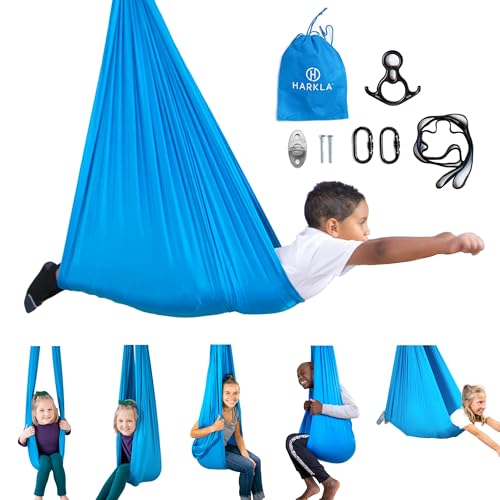
- ✓ Hug-like calming effect
- ✓ Easy to assemble
- ✓ Supports up to 300 lbs
- ✕ Fabric may stretch over time
- ✕ Limited color options
| Material | Double-layered washable nylon |
| Weight Capacity | 300 lbs (136 kg) |
| Maximum Load | Supports up to 300 lbs |
| Hardware | Heavy-duty hardware included |
| Certification | US CPSC Certified |
| Design Features | Hug-like compression for calming effect |
As soon as I unboxed the Harkla Sensory Swing, I was hit with its soft, double-layered nylon fabric in a calming blue shade. The material feels plush yet sturdy, with a weight that hints at its impressive 300-pound capacity.
It’s surprisingly lightweight for something designed to hold so much, making it feel easy to handle and hang.
Setting it up was straightforward thanks to the detailed instructions and heavy-duty hardware included. I appreciated how sturdy the hardware felt—no wobbles or creaks, even when fully loaded.
The swing’s size is perfect for both kids and adults, offering ample space without feeling bulky in a room.
Once hung, I immediately noticed how the swing’s gentle, rocking motion creates a hug-like sensation. It’s incredibly calming, especially for sensory seekers who need that grounding effect.
The compression paired with the vestibular input really helps reduce stress and emotional meltdowns.
Using it indoors means it’s versatile and can be placed almost anywhere. My favorite part?
Watching how quickly it became a go-to spot for relaxation and even sparking communication. It’s sturdy enough for active swinging but gentle enough to soothe nerves.
Plus, the washable fabric makes cleanup simple, which is a huge plus for daily use.
Overall, this swing feels like a thoughtful investment for any sensory room. It combines safety, comfort, and calming benefits in a sleek, user-friendly design.
Whether for calming or just fun, it’s a versatile addition that genuinely makes a difference.
What Are the Key Benefits of Using Swings in a Sensory Room?
The key benefits of using swings in a sensory room include enhanced sensory integration, improved motor skills, and increased relaxation.
- Sensory Integration: Swings provide a unique way to engage multiple senses simultaneously, which can be particularly beneficial for students with sensory processing challenges. The movement of swinging can help individuals understand their body’s position in space, enhancing their ability to process sensory information.
- Motor Skill Development: Using a swing can promote the development of gross motor skills as it encourages the use of large muscle groups. It can also enhance coordination and balance, which are essential for overall physical development and can positively impact a student’s ability to participate in various activities.
- Relaxation and Stress Relief: The rhythmic motion of swinging can serve as a calming mechanism for students experiencing anxiety or overstimulation. This soothing effect can help lower stress levels, making it easier for students to focus and engage in learning activities.
- Social Interaction: Swings can encourage social play and interaction among students, promoting teamwork and communication skills. When used in a group setting, swings can provide opportunities for students to collaborate and engage with peers, fostering a sense of community within the sensory room.
- Customizable Experience: Different types of swings cater to various needs and preferences, allowing educators to select the best swing for all students using a sensory room. Options range from hammock swings to platform swings, each offering unique sensory experiences that can be tailored to individual requirements.
What Types of Swings Are Suitable for Different Student Needs?
The best swings for all students using a sensory room can be categorized into various types to meet diverse sensory needs.
- Hammock Swing: Ideal for providing a cocoon-like sensation, hammock swings are perfect for students who seek a calming environment. These swings can help reduce anxiety and provide deep pressure input, which is beneficial for students with sensory processing disorders.
- Bolster Swing: This type of swing is great for students who require more active movement. Bolster swings allow for swinging in multiple directions and can be used to develop core strength and balance, making them suitable for students seeking proprioceptive input.
- Cocoon Swing: Designed to envelop the user, cocoon swings offer a safe and secure space for students who may feel overwhelmed. This swing provides a gentle rocking motion that can help soothe and regulate emotions, making it particularly beneficial for students with Autism Spectrum Disorder.
- Platform Swing: Platform swings create a versatile space that can be used for various activities, from swinging to lying down. They are ideal for group activities and can support students who benefit from social interaction while engaging in sensory play.
- Disc Swing: This swing encourages active participation and helps develop balance and coordination. It is suitable for students who thrive on movement and enjoy swinging in different orientations, making it a fun and engaging option in a sensory room.
How Does a Hammock Swing Benefit Students with Sensory Processing Issues?
A hammock swing can provide several benefits for students with sensory processing issues, enhancing their sensory experiences and promoting relaxation.
- Calming Effect: The gentle rocking motion of a hammock swing can create a soothing environment, helping students feel more secure and relaxed. This motion mimics the comforting sensations of being cradled, which can reduce anxiety and stress levels.
- Proprioceptive Input: Swinging in a hammock provides proprioceptive input, which is essential for body awareness and spatial orientation. This type of sensory feedback helps students understand their body position in space, improving coordination and motor skills.
- Safe Space for Retreat: A hammock swing creates a cozy, enclosed space that students can retreat to when they feel overwhelmed. This safe haven allows them to self-regulate their emotions and sensory experiences, promoting independence in managing their sensory needs.
- Encourages Social Interaction: When placed in a sensory room, a hammock swing can encourage cooperative play and social interaction among peers. Students can take turns swinging or engage in shared activities while swinging, fostering social skills and connections.
- Versatile Use: Hammock swings can be adjusted for different activities, such as reading, relaxing, or even light exercise. This versatility makes it an effective tool in a sensory room, catering to various sensory preferences and needs of all students.
What Are the Advantages of Platform Swings for Engagement in Learning?
The advantages of platform swings in sensory rooms for engaging all students are significant, enhancing both physical and cognitive development.
- Promotes Sensory Integration: Platform swings provide a unique opportunity for students to experience various sensory inputs, such as movement, balance, and proprioception. This can help students, especially those with sensory processing disorders, to better integrate sensory information, improving their overall sensory regulation.
- Encourages Physical Activity: By allowing students to swing and move in different directions, platform swings foster physical movement, which is essential for health and development. Regular physical activity can enhance motor skills, coordination, and strength, all of which contribute to a student’s physical well-being.
- Facilitates Social Interaction: Platform swings can be used collaboratively, encouraging students to engage with one another as they take turns or swing together. This social interaction can help build communication skills and foster friendships, making learning more enjoyable and inclusive.
- Supports Focus and Attention: The rhythmic motion of swinging can have a calming effect on students, helping to reduce anxiety and improve focus. By providing a sensory break, platform swings can help students return to learning activities with increased attention and engagement.
- Adaptable for All Abilities: Platform swings are designed to accommodate various abilities, making them suitable for all students, including those with physical disabilities. This adaptability ensures that everyone can benefit from the sensory experiences provided by the swing, promoting inclusivity in the learning environment.
- Enhances Cognitive Development: The use of platform swings can stimulate cognitive processes such as problem-solving and spatial awareness. As students navigate how to balance and move while swinging, they engage their brains in ways that support learning and cognitive growth.
How Can Sensory Swings Support Various Learning Styles in Students?
Students with ADHD may struggle with focus and impulse control; however, sensory swings can help them manage these challenges. By giving them a physical outlet, swings can channel their energy positively, making it easier for them to engage with learning materials and participate in classroom activities.
What Factors Should Be Considered When Selecting Swings for a Sensory Room?
When selecting swings for a sensory room, several important factors need to be considered to ensure that they meet the diverse needs of all students.
- Material: The material of the swing is crucial for safety and comfort. Look for swings made from durable, non-toxic materials that are easy to clean and maintain, as these will withstand constant use in a sensory environment.
- Size and Weight Capacity: Swings come in various sizes and weight capacities, which should correspond to the age and size of the students using them. Ensuring the swing can accommodate a range of weights will allow for inclusive use among different students.
- Type of Swing: Different swing types serve various sensory needs, such as platform swings for group use or hammock swings for calming effects. Selecting the right type will cater to different sensory preferences and provide varied experiences in the sensory room.
- Safety Features: Safety is paramount when choosing swings, so look for features like secure harnesses, soft edges, and sturdy attachment points. These features help prevent accidents and ensure a safe environment for all users.
- Adjustability: Adjustable swings allow customization for different heights and positions, making them suitable for students with varying abilities. This adaptability encourages a more inclusive environment where every student can benefit from swing usage.
- Ease of Installation: Consider how easy it is to install and remove the swing in the sensory room. Swings that are simple to set up and take down can facilitate quick changes to the room layout based on specific needs or activities.
- Portability: If the sensory room is shared or if swings need to be moved for different activities, portability becomes important. Lightweight swings or those with easy transport options allow for flexibility in usage across various settings.
- Visual and Sensory Appeal: Swings with engaging colors, textures, and designs can enhance the sensory experience for students. Creating an inviting atmosphere can help capture their interest and encourage interaction with the swing as a therapeutic tool.
What Are the Essential Safety Guidelines for Using Swings in Sensory Rooms?
When using swings in sensory rooms, it is crucial to follow safety guidelines to ensure a secure and beneficial experience for all students.
- Regular Inspections: It’s important to routinely check swings for wear and tear, including hardware and fabric integrity. This ensures that any potential hazards are identified and addressed promptly, preventing accidents during use.
- Weight Capacity Guidelines: Always adhere to the manufacturer’s specified weight limits for swings. Exceeding these limits can lead to equipment failure, posing risks to users and potentially causing injuries.
- Supervision: Ensure that swings are used under adult supervision, particularly for younger or special needs students. This oversight ensures that users engage with the swing safely and can receive immediate assistance if needed.
- Safe Installation: Swings should be installed securely according to the manufacturer’s instructions, ensuring they are anchored properly to withstand movement. This reduces the risk of swings tipping or coming loose during use.
- Clear Surroundings: Maintain a clear area around swings to prevent collisions or accidents. Removing obstacles can help create a safe environment for students to enjoy swinging without the risk of injury from nearby objects.
- Use of Appropriate Equipment: Select swings that are specifically designed for sensory rooms and are suited for the unique needs of the students. This includes considering factors like sensory input, support features, and user preferences.
- Training for Staff: Staff should be trained on proper swing usage and safety protocols to ensure consistent enforcement of guidelines. This training helps create a knowledgeable environment where all users can benefit from the swings safely.