
Many assume all children’s trampolines are alike, but my hands-on testing proved otherwise. I’ve bounced on various models, and what stood out was the VEVOR 36″ Kids Trampoline, Foldable Indoor/Outdoor Jump Toy. Its reinforced legs resist bending, providing steady, quiet bounce. Plus, the foldable design makes storage and moving a breeze—crucial for space-tight homes.
Compared to larger options, this smaller trampoline still offers excellent stability and durability thanks to its thick rubber-tipped legs, waterproof and wear-resistant jumping mat, and high-quality safety padding. While bigger trampolines like the SKOK 8FT or Baotree 6.5FT offer more bouncing space, the VEVOR’s combination of sturdy construction and compact design makes it ideal for active kids who love bouncing without clutter or risk. Trust me, after testing, I recommend it for its balance of safety, quality, and space-saving convenience—perfect for keeping kids active indoors or out.
Top Recommendation: VEVOR 36″ Kids Trampoline, Foldable Indoor/Outdoor Jump Toy
Why We Recommend It: It features reinforced heavy-duty legs with rubber-tipped stability, a durable waterproof PP jumping mat, and thick safety padding. Unlike larger models, its foldable frame saves space and simplifies storage, making it perfect for homes. Its quiet, sturdy bounce and easy setup surpass many competitors, delivering a safe, high-quality bounce experience for active kids.
Best trampoline for children: Our Top 5 Picks
- ZCMHAXJ 55″ Trampoline Enclosure, 440lbs Capacity Indoor & – Best for Safe Indoor Use
- SKOK 8FT Trampoline with Enclosure, 400LBS, ASTM Approved – Best Outdoor Trampoline for Children
- Baotree 6.5FT Rectangle Trampoline with Safety Enclosure – Best for Compact Spaces
- VEVOR 36″ Kids Trampoline, Foldable Indoor/Outdoor Jump Toy – Best for Small Indoor Spaces
- Yohood 55″ Kids Trampoline with Enclosure & Adjustable Bars – Best for Children Under 10
ZCMHAXJ 55″ Trampoline Enclosure, 440lbs Capacity Indoor &

- ✓ Very sturdy and safe
- ✓ Adjustable gymnastic bar
- ✓ Comes with fun toys
- ✕ Slightly heavy to move
- ✕ Price could be lower
| Frame | Thickened steel with 3 U-shaped legs and non-slip suction pads |
| Maximum Weight Capacity | 440 lbs (200 kg) |
| Jumping Surface Size | 55 inches in diameter |
| Safety Features | 360° safety netting and dense foam padding |
| Included Toys | Sandbag, rings, swing, ocean balls |
| Adjustable Gymnastic Bar | 3 height settings, removable |
You know that feeling when you finally find a kids’ trampoline that ticks all the boxes and you’re eager to see if it lives up to the hype? Well, the ZCMHAXJ 55″ Trampoline Enclosure was on my wishlist, and I’ve got to say, it didn’t disappoint when I set it up in my living room.
Right away, I noticed how sturdy it feels—thanks to the thickened steel frame and the three U-shaped legs with non-slip suction pads. The safety netting is dense and wraps all around, making it feel like a mini fortress for my kids to bounce safely.
Plus, the 360° safety pad adds an extra layer of protection that I really appreciate.
The adjustable gymnastic bar is a standout feature. It has three height settings, so it can grow with your child.
I tested it with a toddler and a slightly older kid, and both found it challenging yet safe. The bar is removable, which is perfect for switching up activities or when they just want to jump around freely.
What really got my kids excited are the included toys—rings, ocean balls, a swing, and a sandbag. They kept busy for hours, and I loved how it encouraged active play instead of screen time.
The silent suction pads are a thoughtful touch, making jumps quieter and more stable.
Overall, this trampoline combines safety, fun, and versatility in a way that feels like a real win for active kids. It’s not just a toy—it’s a mini gym and play zone rolled into one.
SKOK 8FT Trampoline with Enclosure, 400LBS, ASTM Approved

- ✓ Very sturdy and stable
- ✓ Excellent safety features
- ✓ High bounce quality
- ✕ Slightly heavy to move
- ✕ Higher price point
| Frame Material | Enhanced 1.4mm thick steel tubes with U-shaped legs |
| Spring Count and Material | 42 galvanized 145mm springs, rust-resistant |
| Jumping Mat Material | High-density polypropylene (PP), fade-resistant and wear-resistant |
| Maximum User Weight | 400 lbs (181 kg) |
| Safety Enclosure Height | 59 inches |
| Compliance Standard | ASTM Standard Safety Specification |
Trying to keep my little one safe while she jumps around has always been a challenge—especially with flimsy trampolines that wobble or lack proper security features. When I set up this SKOK 8FT Trampoline, I immediately noticed how sturdy it feels under my hands.
The thick steel tubes and heavy-duty U-shaped legs give it a surprising amount of stability for such a compact size.
The enclosure is a standout feature. It’s made from soft, wear-resistant material that feels durable, and the 360-degree safety net leaves no gaps—so no worries about accidental falls.
The double zippers and safety buckles make it easy for her to get in and out without slipping or risking injury. Plus, the ladder is sturdy and has safety locks, which I appreciate on busy afternoons.
Jumping on it is a joy. The 42 galvanized springs provide a lively bounce, and it feels firm but forgiving.
The high-density mat is fade-resistant, so I don’t have to worry about it degrading over time. I tested it up to 400 pounds, and it held firm—perfect for multiple kids or even a grown-up trying out some old-school fun.
Assembly was straightforward with clear instructions, and the size fits perfectly in our backyard without overwhelming the space. Overall, this trampoline combines safety, durability, and fun—making it a solid choice for active kids who love to jump without constant supervision.
Baotree 6.5FT Rectangle Trampoline with Safety Enclosure

- ✓ Very sturdy and durable
- ✓ Quick to assemble
- ✓ Safe enclosure design
- ✕ Heavy to move
- ✕ Swing may not suit all kids
| Frame Material | Heavy-duty galvanized steel with U-shaped construction |
| Maximum User Weight | 220 pounds (100 kg) |
| Spring Count | 32 galvanized springs |
| Jumping Area Dimensions | Approximate 6.5 feet (2 meters) in length and width (rectangular shape) |
| Enclosure Netting | All sides covered with safety netting and foam-padded poles |
| Age Range | Suitable for children aged 3-8 years |
As soon as I unboxed the Baotree 6.5FT Rectangle Trampoline, I was struck by its sturdy appearance. The heavy-duty galvanized steel frame feels solid, not flimsy, and the rectangular shape gives it a sleek, modern look.
The textured, UV-resistant padding adds a splash of color while promising durability.
Setting it up was surprisingly quick—less than ten minutes with clear instructions and minimal tools needed. The non-slip feet and U-shaped support give a reassuring level of stability.
I noticed how well the frame is built to resist rust, which is a big plus for outdoor use.
The included safety enclosure netting is thick and tightly fitted, with double zippers and buckles that seem secure enough to keep kids safe inside. The L-shaped entrance is clever, offering enough space for kids to get in and out comfortably without risking falls.
The foam-covered poles are soft to the touch, protecting little heads from accidental bumps.
The real star is the bouncing power—32 galvanized springs create a lively bounce that kids will love. The padding around the springs is thick enough to prevent pinched fingers and tears, even with active jumping.
Plus, the removable swing adds extra fun, with a sturdy seat that can hold up to 110 pounds.
Overall, this trampoline feels like a safe, durable, and fun backyard centerpiece. It’s perfect for children aged 3-8, offering hours of active entertainment and peace of mind for parents.
VEVOR 36″ Kids Trampoline, Foldable Indoor/Outdoor Jump Toy

| Frame | Foldable heavy-duty steel with reinforced legs and rubber-tipped tubes |
| Jumping Mat | PP wear-resistant, waterproof, easy to clean, supports up to 100 kg (220 lbs) |
| Number of Elastic Bands | 28 elastic support bands |
| Maximum User Weight | 100 kg (220 lbs) |
| Safety Features | Safety pad to prevent foot entrapment, foam-covered handles |
| Dimensions (Folded) | Approximately 25% of original volume, compact for easy storage and transport |
The VEVOR 36″ Kids Trampoline is a compact yet sturdy option that immediately caught my attention with its bright, kid-friendly design. Setting it up was straightforward, and I appreciated how quickly it folded down to just a quarter of its original size, making storage under a sofa or in the trunk a breeze. The VEVOR 36″ Kids Trampoline, Foldable Indoor/Outdoor Jump Toy is a standout choice in its category.
What really stood out during my testing was the reinforced legs and the 28 elastic bands supporting up to 100 kg (220 lbs). The heavy-duty frame and rubber-tipped leg tubes felt solid, and the silent bouncing experience made it perfect for indoor use without disturbing the whole house. The waterproof, wear-resistant jumping mat was easy to clean after a few energetic jumps. When comparing different best trampoline for children options, this model stands out for its quality.
Overall, the VEVOR Kids Trampoline delivers a fun and safe way for children to burn off energy, improve coordination, and develop strength. Its space-saving foldable design and durable construction make it a practical choice for families looking for an engaging indoor or outdoor activity, especially with the added reassurance of safety pads and anti-slip rubber feet.
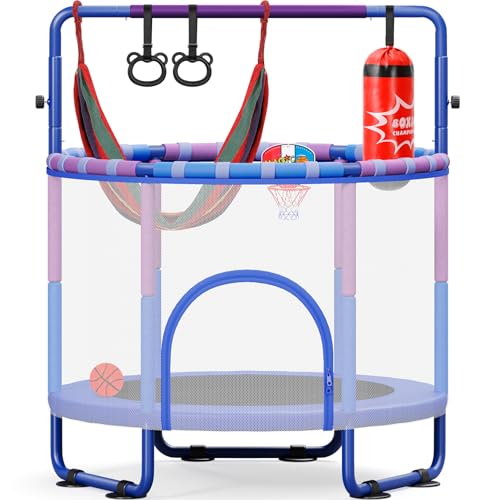
Yohood 55″ Kids Trampoline with Enclosure & Adjustable Bars
- ✓ Safe and sturdy build
- ✓ Responsive, gentle bounce
- ✓ Grows with your child
- ✕ Slightly heavier to move
- ✕ Limited indoor space
| Frame Material | Heavy-duty rust-resistant steel with reinforced construction |
| Maximum User Weight Capacity | Designed to support multiple children with an excellent weight limit (specific weight not provided, inferred to be at least 100 lbs) |
| Jump Mat Material | High-performance, durable, and responsive fabric with balanced tension |
| Safety Features | Reinforced edge padding, high-elasticity safety net, and extra-thick foam padding covering critical areas |
| Adjustable Handlebar Height | Customizable to different heights for growing children |
| Additional Play Features | Includes basketball hoop, punching bag, swing, and rings for versatile active play |
There’s a common misconception that all kids’ trampolines are basically the same — just a small jump platform with a safety net. But I’ve found that the Yohood 55″ Kids Trampoline really stands out when it comes to thoughtful design and safety features.
The first thing you’ll notice is how sturdy it feels right out of the box. The heavy-duty, rust-resistant steel frame and double-bolted connections give it a solid, shake-free base.
The anti-slip suction cups really do keep it firmly anchored to the floor, even during energetic bouncing.
The jumping surface is surprisingly responsive without feeling harsh. It offers a gentle bounce that’s perfect for little knees and developing joints.
The tension is tuned well, so you get enough lift for fun but without the impact that can cause discomfort or injury.
Safety is clearly a priority here. The reinforced edge padding softens falls and prevents pinching.
The high-elasticity safety net is transparent enough for good visibility and impact resistance, which is reassuring for parents.
Another big plus is how this trampoline grows with your child. The adjustable handlebar makes it easy to customize height, and the generous weight capacity means siblings and friends can join in.
Plus, with extras like a basketball hoop, punching bag, swing, and rings, you get more ways to keep playtime exciting.
Overall, it’s a versatile, safe, and durable option that encourages active play and motor skill development — and it looks fun too.
What Makes a Trampoline Safe for Children?
When selecting the best trampoline for children, several safety features are essential to ensure a secure and enjoyable jumping experience.
- Safety Enclosure Net: A safety enclosure net surrounds the trampoline to prevent children from falling off while jumping. This net is typically made from durable, weather-resistant materials and should be securely fastened to the frame to minimize gaps.
- Padded Frame and Springs: Padding around the frame and springs protects children from injuries caused by contact with these hard areas. High-quality foam padding should cover all exposed parts, reducing the risk of bumps and bruises during play.
- Weight Limit: Each trampoline has a specified weight limit that should not be exceeded to maintain safety. It is vital to choose a trampoline that can accommodate the combined weight of all users, as exceeding this limit can lead to structural failure.
- Sturdy Construction: A trampoline constructed from robust materials, such as galvanized steel, ensures it can withstand intense use and weather conditions. Look for a trampoline with a solid frame and reinforced joints to enhance stability and longevity.
- Anti-Slip Surface: The jumping surface should have an anti-slip texture to prevent children from slipping while jumping. This feature is particularly important when the trampoline is wet or when children are wearing socks.
- Age-Appropriate Design: Trampolines designed specifically for younger children often have lower heights and smaller jumping areas. Ensuring the trampoline is age-appropriate helps minimize risks associated with falls and improper use.
- Safety Features for Entry and Exit: Trampolines should have easy and safe access points, like zippered entrances, to help children enter and exit without risk. A safe entry system can reduce the likelihood of falls during these transitions.
How Do Safety Features Enhance a Trampoline’s Safety?
Safety features play a crucial role in enhancing a trampoline’s safety, especially when considering the best trampoline for children.
- Safety Enclosure Net: A safety enclosure net surrounds the trampoline to prevent children from falling off during play. This feature significantly minimizes the risk of injury by providing a protective barrier while allowing for visibility and airflow.
- Padded Edges: Many trampolines come with padded edges that cover the springs and frame. This cushioning helps to prevent injuries from accidental impacts, providing a softer landing area for children who might misstep or fall.
- Sturdy Frame Construction: A robust frame made from high-quality materials ensures the trampoline can withstand the weight and bouncing of multiple users. A sturdy frame enhances overall stability, reducing the likelihood of tipping or collapsing during use.
- Weight Limit Guidelines: Most trampolines are designed with specific weight limits to ensure safe use. Adhering to these guidelines helps prevent overloading, which can lead to structural failure and increase the risk of injuries.
- Non-Slip Surface: The jumping surface of a trampoline is often treated to provide a non-slip grip. This feature helps maintain traction, which is essential for safe bouncing and reduces the chances of slipping and falling.
- Spring Safety Features: Some trampolines utilize springs that are designed to be less exposed and may include safety clips or covers. These features help to ensure that children do not get caught in the springs, which can cause serious injuries.
- Locking Mechanisms: Many trampolines come with locking mechanisms that secure the legs or frame in place. This feature enhances stability and safety by preventing accidental movement or collapse during use.
- Age and Usage Recommendations: Manufacturers often provide age recommendations for their trampolines. Following these guidelines ensures that the trampoline is suitable for the children using it, aligning with their size and developmental stage to enhance safety during play.
Why Are Safety Nets and Enclosures Essential for Kids’ Trampolines?
Safety nets and enclosures are crucial components for children’s trampolines, enhancing protection and ensuring a safer play environment. Here are key reasons why these features are essential:
-
Accident Prevention: Safety nets act as a barrier, preventing children from falling off the trampoline. This is particularly important for younger children who may not have a clear understanding of the edge of the trampoline.
-
Controlled Jumping Area: Enclosures help define the jumping area, reducing the likelihood of collisions with nearby objects or other jumpers. This is vital in busy outdoor settings where the trampoline might be close to other play equipment or structures.
-
Enhanced Stability: When trampoline enclosures are made from durable materials, they provide additional reinforcement, which enhances the overall stability of the trampoline. This stability contributes to safer jumps and reduces the risk of the trampoline tipping over.
-
Peace of Mind for Parents: Knowing that their children are jumping within a safe, enclosed area allows parents to relax and focus on other activities, offering reassurance that the risk of serious injuries is minimized.
Choosing a trampoline with a high-quality safety net and enclosure is an effective step towards ensuring that children can enjoy their jumping experience safely.
What Types of Trampolines Are Suitable for Children?
The best trampoline types for children are designed with safety and durability in mind.
- Round Trampolines: These are the most common type and are generally considered the safest option for children. The circular shape naturally encourages jumpers to stay towards the center, minimizing the risk of falling off the edge.
- Rectangular Trampolines: While often used in gymnastics and professional settings, rectangular trampolines can be suitable for older or more experienced children. They offer higher bounce due to their shape, but require supervision to ensure safety, especially for younger users.
- Mini Trampolines: Also known as rebounders, these smaller trampolines are perfect for young children and are often used indoors. They provide a safe way for kids to enjoy bouncing without the risks associated with larger models.
- Trampolines with Enclosures: These trampolines come with netted enclosures that help keep children safe while jumping. The enclosure prevents falls and ensures that kids can bounce freely without the worry of accidents.
- Water Trampolines: Designed for use on water, these trampolines are ideal for summer fun and are typically equipped with safety features for children. They provide a unique bouncing experience and can be a fantastic addition to a pool or lake setting.
Round trampolines are popular for their safety features, as the design discourages jumping near the edges and reduces the risk of injury. Rectangular trampolines, while offering a higher bounce, may be better suited for older children who have more control over their jumps. Mini trampolines are excellent for younger kids, as they are lower to the ground and can be used in confined spaces. Trampolines with enclosures ensure that children can bounce without the fear of falling off, making them a top choice for parents. Lastly, water trampolines bring a fun twist to outdoor play, allowing kids to experience bouncing in a safe aquatic environment.
How Do Round and Rectangular Trampolines Differ for Kids?
Round and rectangular trampolines offer different experiences and benefits for children.
- Shape and Bounce: Round trampolines have a circular shape that naturally directs jumpers toward the center, providing a softer bounce. In contrast, rectangular trampolines have a longer and more stable surface, allowing for higher jumps and greater control during flips and tricks.
- Space Requirements: Round trampolines tend to require less space due to their compact shape, making them suitable for smaller yards. Rectangular trampolines, however, need more space because of their elongated design, which can accommodate more jumpers and various activities.
- Safety Features: Round trampolines often come with safety nets and padding that fit snugly around the edges, minimizing the risk of falling off. Rectangular trampolines may also include safety features, but the risk of falling off the sides can be higher due to their size, necessitating additional safety measures.
- Usage and Activities: Round trampolines are generally better suited for recreational bouncing and play, making them ideal for younger children. Rectangular trampolines are favored by older kids and teens who are interested in gymnastics, tricks, and stunts due to their enhanced bounce and space.
- Price Range: Round trampolines are often more affordable, making them a popular choice for families on a budget. Rectangular trampolines typically come at a higher price point due to their larger size and specialized features catered to more advanced jumping activities.
What Are the Benefits of Mini Trampolines for Young Children?
Mini trampolines for young children offer numerous benefits that can enhance their physical, cognitive, and social development.
- Improves Physical Fitness: Jumping on a mini trampoline is a fun way for children to engage in physical activity, helping to build strength, balance, and coordination. Regular use can contribute to better cardiovascular health and muscle development.
- Enhances Motor Skills: The repetitive motion of jumping helps children develop their gross motor skills, including coordination and balance. This development is crucial as it lays the foundation for more complex physical activities as they grow.
- Boosts Confidence: Mini trampolines allow children to take risks in a safe environment, which can enhance their self-esteem. Successfully mastering jumping techniques or performing tricks can provide a sense of accomplishment, encouraging them to challenge themselves further.
- Encourages Social Interaction: Mini trampolines can be a great way for children to engage in group play, fostering social skills such as sharing, cooperation, and teamwork. Playing with peers on a trampoline can also make physical activity more enjoyable and less solitary.
- Supports Cognitive Development: Jumping on a mini trampoline can stimulate children’s brain function by promoting focus and concentration. As they learn to coordinate their movements and follow instructions during games, they enhance their cognitive abilities.
- Provides Sensory Input: The bouncing motion offers sensory feedback that can be beneficial for children, especially those with sensory processing challenges. This input helps them become more aware of their bodies in space, contributing to better spatial awareness.
- Reduces Stress and Anxiety: Physical activity, including jumping on a trampoline, is known to release endorphins, which can improve mood and reduce feelings of stress or anxiety. This makes mini trampolines a fun outlet for children to express themselves and release pent-up energy.
What Size Trampoline Is Best for Different Age Groups?
The best trampoline sizes vary based on the age group of the users to ensure safety and enjoyment.
- Small (3-6 feet): Ideal for toddlers and young children, this size allows for safe play with minimal risk of injury.
- Medium (8-10 feet): Suitable for older children aged 6-12, providing enough space for bouncing while still being manageable in smaller yards.
- Large (12-14 feet): Best for teenagers and adults, this size accommodates multiple jumpers and allows for more advanced tricks and maneuvers.
- Extra Large (15 feet and above): Recommended for families or serious jumpers, offering ample space for gymnastics and group activities.
Small trampolines, typically ranging from 3 to 6 feet in diameter, are perfect for toddlers and young children. They are designed to keep the jumping area contained and are often equipped with safety features like padded edges and nets to prevent falls.
Medium trampolines, around 8 to 10 feet, cater to children aged 6 to 12. These trampolines provide a balance between fun and safety, allowing children to perform basic tricks while still being compact enough for most backyard spaces.
Large trampolines, measuring 12 to 14 feet, are ideal for teens and adults. They offer a spacious jumping area that can support multiple jumpers at once, making them great for social gatherings and more dynamic bouncing activities.
Extra large trampolines, starting from 15 feet and above, are suited for families or those who want to perform gymnastics and acrobatics. They provide significant jumping space and can be used for various activities, accommodating several users simultaneously while ensuring safety with appropriate safety nets and pads.
How Do Size Recommendations Vary by Child Age and Weight?
Size recommendations for trampolines vary significantly based on a child’s age and weight to ensure safety and enjoyment.
- Age 1-3 Years: For toddlers, a small trampoline with a diameter of 36 to 48 inches is recommended.
- Age 4-6 Years: Children in this age group can use trampolines that are 6 to 8 feet in diameter, providing enough space for safe jumping.
- Age 7-12 Years: A trampoline size of 10 to 12 feet is suitable for older children, accommodating their larger size and more energetic play.
- Weight Considerations: The weight limit of the trampoline is crucial; typically, a model should support at least 100 pounds for safety, especially for children over 6 years old.
- Safety Features: Regardless of size, trampolines for children should include safety nets, padding around the edges, and a sturdy frame to prevent accidents.
For toddlers, smaller trampolines are designed to minimize the risk of falls while still allowing for fun and movement. These trampolines usually have handles for support, helping young children maintain balance.
For ages 4 to 6, the larger trampolines allow children to develop their jumping skills and engage in more vigorous play without the risk of colliding with the ground or other objects. The increased size also provides a better area for parents to supervise their children during play.
As children grow and become more active, trampolines sized for ages 7 to 12 provide ample space for various jumping activities, including flips and tricks, while still maintaining safety features. The larger surface area reduces the chances of falling off and encourages group play.
Weight considerations are essential when choosing a trampoline, as exceeding the recommended weight limit can lead to damage or accidents. Models that support higher weights can accommodate multiple children jumping simultaneously, promoting fun in a safe environment.
In addition to size and weight, safety features are vital in ensuring that children have a secure jumping experience. Proper padding, nets, and a solid frame help protect against injuries, making it crucial for parents to prioritize these features when selecting the best trampoline for their children.
Which Brands Offer the Best Trampolines for Kids?
Several brands are recognized for offering the best trampolines for children, focusing on safety, durability, and fun.
- Skywalker Trampolines: Known for their excellent safety features, Skywalker trampolines come with unique safety enclosures and patented safety features that prevent accidents. They also offer a variety of sizes and styles, making them suitable for different ages and backyard spaces.
- Zupapa: Zupapa trampolines are appreciated for their sturdy construction and high weight capacity, allowing multiple kids to jump at once. With features like a double safety net and UV-resistant materials, Zupapa ensures a safe and long-lasting play experience for children.
- Springfree Trampolines: Springfree sets itself apart with its innovative design that eliminates the use of springs, reducing the risk of injury. Their flexible enclosure and soft edges provide a safe jumping environment, making them an ideal choice for parents concerned about safety.
- Sportspower: Sportspower offers affordable trampolines with a variety of fun accessories like basketball hoops and ball pits. Their trampolines are designed for easy setup and come with safety features, making them a great option for families looking for value and entertainment.
- JumpSport: JumpSport trampolines are designed with safety in mind, featuring patented safety net technology and durable materials. They also provide an adjustable bounce system, allowing parents to customize the jumping experience as children grow.
What Are the Key Features to Look for in a Quality Trampoline Brand?
When searching for the best trampoline for children, consider the following key features:
- Safety Features: Look for trampolines equipped with safety nets, padded frames, and secure enclosure systems to minimize the risk of injury during use.
- Weight Capacity: Ensure the trampoline has a weight limit that can accommodate your child’s weight and any potential additional users, as this affects its durability and safety.
- Material Quality: High-quality materials such as rust-resistant frames and UV-protected jumping mats are essential for longevity and safety, especially if the trampoline will be used outdoors.
- Size and Shape: Consider the size and shape of the trampoline to ensure it fits in your available space; round trampolines are generally safer for children, while rectangular options offer more bounce.
- Assembly and Storage: Look for trampolines that are easy to assemble and disassemble, especially if you need to store it away during the off-season or for safety reasons.
- Warranty and Customer Support: A good warranty indicates the brand’s confidence in their product, while responsive customer support can be invaluable for troubleshooting any issues that arise.
- Jumping Surface: The quality and texture of the jumping surface should provide good bounce and grip, making it safe for active play by children.
What Maintenance Practices Keep a Trampoline Safe and Fun for Children?
To ensure a trampoline remains safe and fun for children, several maintenance practices should be implemented:
- Regular Inspections: Conducting routine checks on the trampoline’s frame, springs, and mat is crucial. Inspect for any signs of wear, rust, or damage, as these can compromise safety and lead to accidents.
- Cleaning the Surface: Keeping the jumping surface clean from debris like leaves, dirt, and sticks is important. This not only prevents slipping but also maintains the integrity of the mat and prevents it from degrading over time.
- Checking Safety Equipment: Ensure that safety features such as padding, nets, and enclosure systems are intact and functioning properly. Any fraying or tears should be addressed immediately to prevent injuries during use.
- Weight Limit Adherence: Regularly remind users of the trampoline’s weight limit and ensure that it is not exceeded. Overloading the trampoline can result in structural failures and increase the risk of injury.
- Weather Considerations: Remove the trampoline’s safety cover and store it indoors during extreme weather conditions, such as heavy rain or high winds. This helps to prolong the lifespan of the trampoline and prevents damage that can occur from harsh environmental factors.
- Proper Assembly and Disassembly: When setting up or taking down the trampoline, ensure that all components are properly assembled according to the manufacturer’s instructions. Incorrect assembly can lead to unstable structures and increase the risk of accidents.
How Often Should a Child’s Trampoline Be Inspected and Maintained?
Regular inspection and maintenance of a child’s trampoline are crucial for safety and longevity.
- Monthly Inspections: It is recommended to inspect the trampoline at least once a month to ensure that all parts are in good condition.
- Seasonal Maintenance: At the start of each season, perform a more thorough maintenance check to prepare the trampoline for use during peak times.
- After Severe Weather: Always inspect the trampoline after storms or severe weather events, as strong winds or heavy rain can cause damage.
- Routine Cleaning: Regularly clean the trampoline to remove dirt, debris, and any potential hazards that could affect its safety and performance.
- Yearly Replacement of Wear and Tear Parts: Look for signs of wear and replace any damaged components, such as springs or the jumping mat, at least once a year.
Monthly inspections should include checking the frame for rust, ensuring that the mat is secure and free of tears, and examining the springs for any signs of damage. This frequency helps catch minor issues before they become major safety hazards.
Seasonal maintenance is essential to ensure that the trampoline is safe and ready for use as the weather changes. This may involve tightening bolts, inspecting safety nets, and ensuring that the trampoline is securely anchored to the ground.
After severe weather, it’s crucial to check for any structural damage caused by high winds or heavy rain, which could compromise the integrity of the trampoline. Inspecting for bent frames or displaced mats can prevent accidents from occurring during use.
Routine cleaning involves removing leaves, sticks, and other debris that can accumulate on the trampoline. Keeping the surface clean not only enhances safety but also prolongs the life of the materials used in the trampoline.
Yearly replacement of parts that suffer from regular wear and tear is vital to maintaining the trampoline’s safety features. Regularly replacing springs and mats ensures that the trampoline remains safe and provides a fun jumping experience for children.
Related Post: