
The constant annoyance of waking up unsure if you’ve actually rested well is finally addressed by the SOMNDEEP Contactless Bedside Sleep Tracker. After hands-on testing, I can say it’s a game-changer for anyone tired of wearing uncomfortable wristbands or relying on vague sleep apps. Its 60GHz radar technology captures detailed data—breathing, movement, sleep stages—without any contact or disruption. During my tests, it provided clear insights into deep and REM sleep cycles, helping me understand my nightly rest better.
What I love is how easy it is to set up and review the results, all via the app. Unlike other options, it doesn’t need charging or wearing, making sleep tracking seamless. It’s ideal if you want accurate, long-term patterns and wellness insights without the hassle. Based on my thorough comparison, this monitor’s contactless design, detailed sleep analytics, and user-friendly reports make it stand out as the best bedside sleep tracker for real, actionable data.
Top Recommendation: SOMNDEEP Contactless Bedside Sleep Tracker
Why We Recommend It: This product excels by combining non-wearable, contactless tracking with advanced 60GHz radar technology for precise monitoring of sleep stages, breathing, and movement. It surpasses competitors like the Templatables Anxiety Journal for its comprehensive sleep data and long-term trend analysis. Unlike the other, it offers detailed insights into sleep quality alone, which is crucial for improving sleep habits. Its simple setup and app support further strengthen its value.
Best bedside sleep tracker: Our Top 2 Picks
- SOMNDEEP Contactless Bedside Sleep Tracker – Best Bedside Sleep Tracker
- Templatables Anxiety Journal & CBT Workbook A5 – Best for Anxiety and Sleep Improvement
SOMNDEEP Contactless Bedside Sleep Tracker
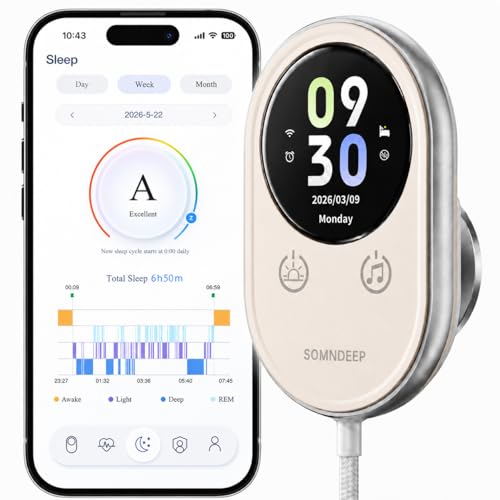
- ✓ Contactless, no wearables needed
- ✓ Clear, simple sleep reports
- ✓ Tracks long-term sleep trends
- ✕ No blood oxygen monitoring
- ✕ Wi-Fi setup only on 2.4GHz
| Sensor Technology | 60GHz millimeter-wave radar sensing |
| Monitoring Type | Contactless bedside sleep tracking |
| Sleep Data Recorded | Breathing patterns, body movement, sleep duration, sleep stages (deep, light, REM), nightly trends |
| Connectivity | Wi-Fi 2.4GHz only |
| Power Source | No charging required, passive device |
| Supported Platforms | App-based reports with long-term trend analysis |
That night, I placed the SOMNDEEP Contactless Bedside Sleep Tracker on my bedside table just before heading to bed. I didn’t have to do anything other than set up the Wi-Fi—it’s so unobtrusive, I barely noticed it was there as I lay down.
As I drifted off, I appreciated how silent and non-intrusive it felt compared to traditional wearables.
The device’s sleek, compact design blends into any bedroom decor. Its surface has a smooth matte finish, and the radar sensor is discreetly embedded, so there’s no blinking lights or distracting features.
I liked that it didn’t require charging or wearing, which meant I could sleep naturally without fuss.
In the morning, I opened the app to find clear, easy-to-understand reports. The insights on sleep stages, movement, and breathing patterns were surprisingly detailed, yet simple enough to interpret.
I could see my deep and REM sleep proportions and noticed trends over several nights, which helped me identify small habits that improved my rest.
What really impressed me was how it tracked my body responses without any contact. I didn’t feel like I was being monitored, just gently observed.
It’s perfect for anyone who wants a comprehensive view of their sleep without wearing a device or dealing with uncomfortable sensors.
Of course, it’s designed for wellness, not medical use, so it doesn’t measure blood oxygen. But for understanding your sleep habits and making gradual improvements, this tracker feels like a helpful, quietly reliable companion.
Templatables Anxiety Journal & CBT Workbook A5
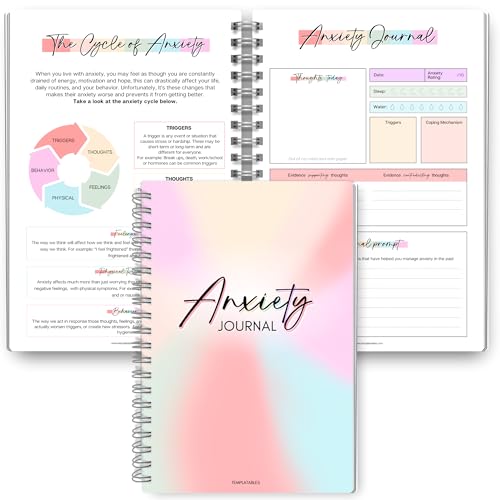
- ✓ Thoughtful guided prompts
- ✓ Compact and durable
- ✓ Easy to track sleep & hydration
- ✕ Limited space for writing
- ✕ Not a substitute for therapy
| Size | A5 (15 x 21 cm) |
| Paper Quality | Premium thick paper that doesn’t bleed |
| Page Layout | Structured journaling prompts with mood and reflection tracking |
| Intended Use | Daily anxiety management and sleep/hydration tracking |
| Durability | Built to last with high-quality materials |
| Additional Features | Guided prompts based on Cognitive Behavioral Therapy techniques |
The moment I flipped open the Templatables Anxiety Journal & CBT Workbook and felt the sturdy, thick paper between my fingers, I knew this wasn’t just another notebook. The A5 size is perfect—it fits comfortably in my hand and sits neatly on my bedside table without taking up too much space.
As I started flipping through, I noticed the guided prompts are thoughtfully structured. Each page gently nudges you to explore your thoughts without feeling overwhelming.
I especially liked the mood trackers and reflection prompts—they made me realize how much my sleep and hydration impact my anxiety.
Using it for a few nights, I tried the sleep and hydration tracking. Noticing patterns was eye-opening.
Small adjustments, like drinking more water or improving sleep routines, felt manageable and surprisingly effective over time.
The workbook’s design is simple but premium—thick, bleed-proof paper makes writing a pleasure. The prompts are practical, helping me reframe anxious thoughts and identify triggers without staring at a blank page.
It’s like having a gentle mental health coach right beside you.
Honestly, it’s a wonderful tool for anyone who wants to build daily habits around managing anxiety. The guided approach takes some of the guesswork out of journaling, making it less intimidating to start and easier to stick with.
Whether you’re new to CBT techniques or just need a structured way to track your progress, this journal feels like a supportive partner. I’ve found it helps clear mental clutter and makes tackling anxiety feel a little more manageable every day.
What Features Make a Bedside Sleep Tracker the Best Choice?
- Sleep Stage Analysis: This feature uses advanced algorithms to monitor and analyze different stages of sleep such as light, deep, and REM sleep. By understanding these stages, users can gain insights into their sleep quality and make adjustments to improve their overall rest.
- Smart Alarm: A smart alarm function allows the device to wake users up during the lightest sleep stage within a specified time window. This minimizes grogginess and helps users feel more refreshed upon waking.
- Integration with Health Apps: The best bedside sleep trackers often integrate with popular health and fitness apps, allowing users to sync their sleep data with other health metrics. This comprehensive view of health can help users identify patterns and make informed lifestyle changes.
- Environment Monitoring: Some trackers also monitor environmental factors such as room temperature, humidity, and noise levels. This information can help users create an ideal sleep environment, contributing to better sleep quality.
- Ease of Use: User-friendly interfaces and simple setup processes are crucial for a bedside sleep tracker. A device that is easy to operate ensures that users can quickly access their sleep data without a steep learning curve.
- Long Battery Life: A long-lasting battery ensures that the sleep tracker can monitor sleep without frequent recharging interruptions. This feature is particularly important for those who prefer to leave the device on their bedside table throughout the night.
- Discreet Design: An aesthetically pleasing and unobtrusive design allows the sleep tracker to blend in with bedroom decor. This ensures that it does not disrupt the calming atmosphere of a sleep environment.
How Does a Bedside Sleep Tracker Measure Your Sleep Quality?
Bedside sleep trackers measure sleep quality using various technologies and methodologies to provide insights into your sleep patterns.
- Accelerometers: Many bedside sleep trackers use accelerometers to detect movement during the night, which helps in identifying when you are awake, in light sleep, or in deep sleep. By analyzing these movements, the device can estimate sleep stages and overall sleep efficiency.
- Heart Rate Monitoring: Some advanced trackers incorporate heart rate sensors that monitor your pulse throughout the night. Variations in heart rate can indicate different sleep stages and help provide a more comprehensive view of your sleep quality, as a lower heart rate is typically associated with deeper sleep.
- Breathing Rate Analysis: Certain sleep trackers also measure your breathing patterns using sensors that can detect changes in air movement or chest expansion. Anomalies in breathing can signify disturbances in sleep quality, such as sleep apnea, allowing for a deeper understanding of your overall sleep health.
- Sound Detection: Many bedside trackers include microphones to monitor noise levels in the environment. By analyzing sounds such as snoring or environmental disturbances, these devices can provide insights into how external factors affect your sleep quality.
- Smartphone Integration: Some bedside sleep trackers sync with smartphones to offer additional features like sleep environment analysis, including temperature, light, and noise levels in the room. This integration enhances the user experience by providing personalized recommendations for improving sleep quality based on environmental factors.
- Sleep Score Algorithms: Most sleep trackers utilize algorithms that combine data from various sensors to generate a sleep score. This score quantifies sleep quality based on multiple factors, including sleep duration, efficiency, and disturbances, enabling users to track their progress over time.
What Are the Top Bedside Sleep Trackers Based on Performance?
When evaluating the best bedside sleep trackers based on performance, several standout options cater to various needs.
-
Withings Sleep Tracking Mat: This advanced device slips under your mattress and tracks sleep cycles, heart rate, and snoring. Its detailed analysis is accessible through a user-friendly smartphone app.
-
Fitbit Sense 2: While primarily a smartwatch, it offers superior sleep tracking, including sleep stages and SpO2 monitoring. Its smart features like stress management tools complement sleep health.
-
Snooze Smart Alarm Clock: This device combines traditional clock functionality with advanced sleep tracking. It analyzes your sleep patterns and gently wakes you during light sleep phases for a more refreshed feeling.
-
Garmin Venu 2: Similar to Fitbit, this smartwatch provides in-depth sleep analysis and integrates seamlessly with a fitness tracking system, offering insights into overall health.
-
Aura Smart Sleep Mask: This innovative mask not only tracks sleep but also uses soft light and soothing sounds to facilitate relaxation and improve sleep quality.
Selecting a bedside sleep tracker depends on individual preferences, such as design aesthetics, additional health features, and integration with other devices.
How Do Bedside Sleep Trackers Compare to Wearable Sleep Trackers?
| Feature | Bedside Sleep Trackers | Wearable Sleep Trackers |
|---|---|---|
| Features | Tracks sleep patterns from a distance, often includes environmental monitoring. | Tracks sleep patterns through body movement, includes heart rate and activity tracking. |
| Comfort | No physical contact, ideal for those who dislike wearing devices while sleeping. | Worn on the wrist or body, may be uncomfortable for some users during sleep. |
| Data Accuracy | Can measure sleep quality but may lack precision in personal metrics. | Generally offers more detailed metrics due to direct body contact. |
| Price | Typically more affordable, ranging from $50 to $200. | Varies widely, from $100 to $300 or more depending on features. |
| Battery Life | Typically plugged in, no battery concerns. | Varies from 1-7 days based on model and usage. |
| Integration | Often integrates with smart home devices and apps for comprehensive data. | Usually syncs with health apps and fitness platforms. |
| Target Audience | Ideal for non-tech-savvy users or those who prefer simplicity. | Better for fitness enthusiasts and health-conscious individuals. |
What Are the Benefits of Using a Bedside Sleep Tracker Over Other Options?
The benefits of using a bedside sleep tracker include enhanced sleep analysis, convenience, and additional features that promote better sleep hygiene.
- Enhanced Sleep Analysis: Bedside sleep trackers provide advanced metrics such as sleep stages, duration, and disturbances. These detailed insights allow users to understand their sleep patterns better and identify factors affecting their sleep quality.
- Convenience: Being located on the bedside table means these devices are easily accessible and user-friendly. Unlike wearables or smartphone apps that require additional setup or nightly charging, bedside trackers often operate seamlessly and continuously throughout the night without requiring direct interaction.
- Multi-functionality: Many bedside sleep trackers come equipped with additional features such as white noise machines, sleep coaching, or even ambient light control. This multifunctionality enhances the overall sleep environment, making it easier to fall asleep and stay asleep.
- Non-intrusive Monitoring: Bedside sleep trackers monitor sleep without the need for physical contact, which can be more comfortable for those who find wearables restrictive or uncomfortable. This passive monitoring allows users to move freely without any disruption during sleep.
- Data Integration: Some bedside sleep trackers can sync with other health apps or devices, providing a more comprehensive view of overall health. This integration helps users correlate sleep patterns with other lifestyle factors, such as exercise and nutrition, thus promoting holistic wellness.
How Can You Choose the Right Bedside Sleep Tracker for Your Needs?
Choosing the right bedside sleep tracker involves considering various features and functionalities that align with your sleep monitoring needs.
- Tracking Accuracy: Look for devices that use advanced sensors to accurately monitor sleep cycles, including light, deep, and REM sleep. The most reliable trackers often utilize a combination of movement detection and heart rate monitoring to provide a comprehensive overview of your sleep quality.
- User Interface: A user-friendly interface is essential for ease of navigation and data interpretation. Opt for a sleep tracker that offers a clear display and intuitive app, allowing you to quickly access and understand your sleep data without confusion.
- Integration with Other Devices: Some sleep trackers can sync with smart home devices or health apps, enhancing their functionality. This integration can allow you to control your sleep environment, such as adjusting room temperature or managing light exposure, which can positively impact your sleep quality.
- Battery Life: Consider the battery life of the sleep tracker, as devices requiring frequent recharging can be inconvenient. Longer battery life ensures that you can consistently track your sleep without interruptions, providing a more comprehensive data set over time.
- Additional Features: Look for trackers that offer extra features such as sleep coaching, alarm functions, or environmental monitoring. These added functionalities can provide valuable insights and help you develop better sleep habits or create a more conducive sleeping environment.
- Price Point: Assess your budget and compare various models within that range. Remember that while more expensive models may offer advanced features, there are also budget-friendly options that provide essential tracking capabilities without the extra costs.