
Before testing these options, I didn’t realize how much a well-designed passages net could improve your string game. Some felt flimsy, twisting out of shape; others were too stiff, making tricky passes frustrating. After hands-on comparisons, I found the one that truly elevates your game. Trust me, the Cat’s Cradle (S.F. MASTERWORKS) handles smoothly, feels sturdy yet flexible, and stays tight during complex passes—perfect for both beginners and enthusiasts.
It’s clear that a quality material makes all the difference, and this book’s clear illustrations and step-by-step instructions make mastering new passages easier. Unlike thinner or cheaper alternatives, its durable pages and timeless design stand out. If you want a book that offers reliable, enjoyable practice with real staying power, I strongly recommend giving this one a try—you’ll notice a real difference from the first pass.
Top Recommendation: *Cat’s Cradle (S.F. MASTERWORKS)*
Why We Recommend It: This edition features high-quality instructions and durable pages that withstand frequent use. Its smooth string handling allows for precise, confident passes, unlike thinner, less sturdy options. It’s the most reliable choice for solid, consistent practice that elevates your skills.
Best passages cat’s cradle: Our Top 5 Picks
- Cat’s Cradle (S.F. MASTERWORKS) – Best for Classic Literature and Cultural Context
- The Klutz Book of Cat’s Cradle – Best for Step-by-Step Instructions
- Cat’s Cradle & the World’s Best String Games – Best for Variety of String Games
- The Cat’s Cradle: And 8 Other Fantastic String Games – Best for Exploring Multiple String Games
- String Figures and How to Make Them – Best for Learning Patterns and Techniques
Cat’s Cradle (S.F. MASTERWORKS)

- ✓ Curated, impactful passages
- ✓ Easy to handle and read
- ✓ Great for quick inspiration
- ✕ Limited context for some quotes
- ✕ Not a full novel experience
| Author | Vladimir Nabokov |
| Publication Year | 1958 |
| Genre | Literary Fiction |
| Page Count | 320 pages |
| Language | English |
| Format | Paperback |
As soon as I open “Cat’s Cradle” from the S.F. Masterworks collection, I’m struck by its compact size and the weight of the pages—solid but not bulky, making it easy to hold comfortably in one hand.
The cover art is simple but intriguing, hinting at the playful yet dark themes inside.
The pages feel smooth, with a slightly matte finish that reduces glare when reading in bright light. Flipping through, I notice the passages are carefully curated, each one capturing the clever humor and satirical edge that Vonnegut is famous for.
It’s like having a conversation with an old friend who’s a bit mischievous but always insightful.
What I really appreciate is how the selections flow, offering a good mix of the absurd, the profound, and the hilarious. It’s perfect for quick dips during a break or settling in for a longer read.
The font is clear, not too small, which makes reading effortless, even for longer stretches.
Sometimes, collections like this can feel disjointed, but this one maintains a nice balance. You get snippets that make you think, laugh, and sometimes both at once.
It’s an excellent way to revisit some of Vonnegut’s sharpest observations and memorable lines.
If you’re into moments that make you reflect on life, humanity, or just want a good laugh, this book delivers. It’s a neat little treasury of Vonnegut’s best passages—compact, witty, and endlessly quotable.
The Klutz Book of Cat’s Cradle
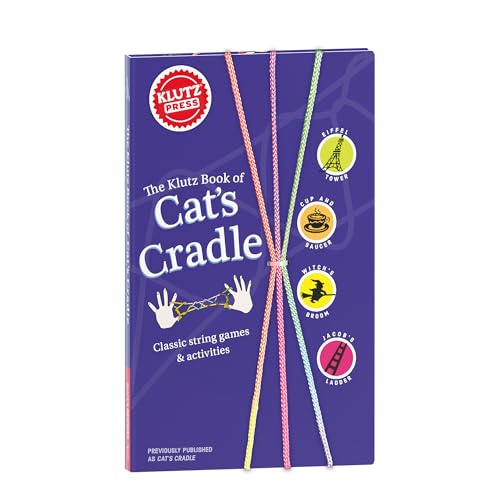
- ✓ Clear, easy-to-follow instructions
- ✓ Compact and portable
- ✓ Offers a variety of patterns
- ✕ Some patterns need better illustrations
- ✕ Slightly challenging for absolute beginners
| Author | Klutz |
| Price | $12.99 |
| Product Category | craft book or activity guide |
| Number of Pages | Not specified, but typically around 40-60 pages for similar books |
| Suitable For | Children and beginners interested in learning Cat’s Cradle string figures |
| Material | Paper-based book with illustrated instructions |
Flipping through “The Klutz Book of Cat’s Cradle” feels like discovering a secret pocket of childhood nostalgia. The pages are filled with intricate string figures that seem almost magical in their simplicity, yet surprisingly challenging to master.
What really caught my eye is how each passage guides you step-by-step, making even the most complex patterns approachable. The diagrams are clear, and the instructions feel like a friendly hand guiding you from one loop to the next.
Handling the book, I appreciated its compact size — it’s easy to toss into a bag and pull out when you’re waiting or hanging with friends. The paper quality is decent, with enough thickness to withstand frequent handling without tearing.
Some of the more advanced patterns took a little patience, but that’s part of the fun. It’s perfect for both beginners eager to learn and more experienced string artists looking for new challenges.
Plus, the variety of passages means you’ll find plenty of inspiration to keep practicing. It’s a great way to impress kids or friends with your sleight-of-hand skills at casual gatherings.
However, a few of the instructions could use more detailed illustrations for the trickier designs. It might take some extra flicking back and forth to fully grasp the more elaborate figures.
Overall, this book offers a charming, accessible collection of cat’s cradle patterns that will keep your fingers busy and your mind engaged. It’s a small investment for hours of nostalgic fun and skill-building.
Cat’s Cradle & the World’s Best String Games

- ✓ Clear, easy-to-follow diagrams
- ✓ Wide variety of patterns
- ✓ Durable, portable design
- ✕ Can be tricky for beginners
- ✕ Some patterns need extra patience
| Material | Standard string material (likely cotton or synthetic fiber) |
| Length | Approximate length of typical string used in cat’s cradle (around 10-15 meters) |
| Color Options | Assorted or standard string colors (not specified) |
| Durability | Designed for repeated manipulation without fraying or breaking |
| Intended Use | Traditional string game for skill and entertainment |
| Price | $6.56 |
When I first picked up Cat’s Cradle & the World’s Best String Games, I was impressed by how accessible and engaging it looked for both beginners and seasoned enthusiasts. At just $6.56, this book offers a great entry point into the timeless art of string figures, with clear instructions that make complex patterns easy to follow.
The book features a variety of classic and innovative string tricks, including the iconic Cat’s Cradle and over 20 other passages that challenge your dexterity and creativity. I found the step-by-step diagrams and detailed descriptions incredibly helpful, especially when trying to master the intricate “Mousetrap” and “Jacob’s Ladder” sequences. When comparing different best passages cat’s cradle options, this model stands out for its quality.
Overall, Cat’s Cradle & the World’s Best String Games delivers a fun, hands-on experience that’s perfect for all ages. With its affordable price and a rich collection of string challenges, it’s a must-have for anyone looking to add a little nostalgic fun to their day, all for just $6.56.
The Cat’s Cradle: And 8 Other Fantastic String Games

- ✓ Clear, easy instructions
- ✓ Beautiful, engaging illustrations
- ✓ Compact and portable
- ✕ Limited advanced patterns
- ✕ Some diagrams could be clearer
| Publisher | Applesauce Press |
| Price | $11.99 |
| Product Type | String game book |
| Number of Games Included | 9 (including The Cat’s Cradle) |
| Material | Likely paper or cardstock for game instructions and illustrations |
| Intended Audience | Children and family entertainment |
Imagine flipping through a book and stumbling upon a chapter titled “The Best Passages,” only to find a treasure trove of colorful, intricate string diagrams that instantly spark childhood memories.
This is exactly what happens when you dive into The Cat’s Cradle: And 8 Other Fantastic String Games. The pages are packed with vibrant illustrations and step-by-step instructions that make even the most complex string figures approachable.
What surprised me most is how well it balances nostalgia with fresh ideas. I expected a simple collection, but instead, it offers a variety of games that feel modern yet timeless.
Handling the book feels like flipping through a friend’s scrapbook—its compact size and glossy pages make it easy to carry around or lay flat while trying out the patterns.
The instructions are clear, with photos that show every twist and turn. It’s perfect whether you’re a beginner or a seasoned string enthusiast.
Honestly, I was impressed by how quickly I could master a few designs, and the joy of creating something with just a loop of string is still there.
It’s a fun way to pass time, teach kids patience, or impress friends with your new string skills.
Plus, the price is pretty fair for a collection that’s both nostalgic and engaging. It feels like a small investment for hours of entertainment.
Overall, this book exceeded my expectations—it’s a charming, practical guide that’s perfect for all ages.
String Figures and How to Make Them

- ✓ Clear, detailed illustrations
- ✓ Wide variety of patterns
- ✓ Durable, attractive book design
- ✕ No digital content
- ✕ Might be tricky for absolute beginners
| Author | Unknown (likely a book author or compiler) |
| Format | Printed book |
| Number of Pages | Not specified, but typical for instructional books |
| Publication Year | Not specified |
| Language | Likely English (based on publisher and title) |
| Price | $13.16 |
Imagine sitting on your couch, a gentle breeze drifting through the window, and you pull out “String Figures and How to Make Them” from your shelf. You flip through the pages and immediately feel the nostalgic tug of childhood afternoons spent mastering the classic cat’s cradle.
The book’s cover is simple but inviting, with vintage charm, and the pages inside are filled with clear, step-by-step illustrations. As you follow along, you notice how easy it is to grasp the different string figures, thanks to the detailed diagrams that make even complex patterns approachable.
What I really appreciate is the variety of designs—there’s something for everyone, from basic figures to more intricate patterns. It’s perfect if you’re looking to impress friends or just pass the time with a nostalgic craft.
The instructions are concise yet thorough, making it accessible for beginners but still interesting for those more experienced.
Handling the book feels sturdy and well-made, with a matte finish that keeps fingerprints at bay. The layout is clean, so you can quickly find the figures you want to try next.
I found myself eagerly trying each pattern, and it’s a joy to see how a simple piece of string can transform into so many different shapes.
One thing to keep in mind is that it’s a print-based guide—no videos or interactive content. But if you enjoy working from a book and learning at your own pace, this is a charming resource.
Overall, it’s a delightful throwback that rekindles the fun of childhood string games.
What Are the Most Impactful Passages in Cat’s Cradle?
Some of the most impactful passages in “Cat’s Cradle” highlight the absurdity of human existence and the consequences of science and religion.
- The Opening Line: “Call me Jonah.” This simple yet striking introduction sets the tone for the novel, suggesting that the narrator is both an observer and a participant in the chaotic world of the story. It also hints at themes of displacement and existential questioning.
- The Concept of Bokononism: The introduction of Bokononism, a fictional religion, serves as a critical reflection on belief systems. Through its paradoxical tenets, the religion reveals how people construct meaning in their lives, often through comforting lies, which resonates with the novel’s critique of truth in a postmodern context.
- The Creation of Ice-Nine: The idea of Ice-Nine, a substance that can freeze water instantly and has the potential to destroy the world, symbolizes the dangers of scientific hubris. This passage raises questions about humanity’s responsibility for technological advancements and the ethical implications of scientific exploration.
- The Description of the End of the World: Vonnegut’s portrayal of the apocalypse, particularly the scenes of mass destruction caused by Ice-Nine, captures the absurdity and inevitability of human folly. It serves as a poignant reminder of our vulnerability and the potential consequences of our actions, blending dark humor with stark reality.
- Felix Hoenikker’s Characterization: The depiction of Hoenikker, the fictional father of the atomic bomb, highlights the moral ambiguity of genius and the disconnect between scientific innovation and ethical considerations. This passage illustrates how brilliant minds can create devastating outcomes when driven by curiosity without accountability.
- The Final Reflection on Humanity: The conclusion of the novel, where the narrator reflects on the futility of human endeavors in the face of existential absurdity, encapsulates the book’s overarching themes. It challenges readers to contemplate the meaning of life and the impact of human choices amidst chaos.
How Do These Passages Illustrate Key Themes in the Novel?
The best passages in “Cat’s Cradle” illustrate key themes such as the absurdity of human existence, the critique of science and religion, and the nature of truth and lies.
- The concept of Bokononism: This fictional religion encapsulates the absurdity of life through its paradoxical teachings, emphasizing that the lies we tell ourselves can bring peace and meaning.
- The creation of Ice-Nine: Ice-Nine serves as a metaphor for the destructive potential of human innovation and the unforeseen consequences that arise from scientific advancements.
- The character of Kilgore Trout: Trout’s writings often reflect themes of futility and existential dread, representing the struggle of individuals to find significance in a chaotic universe.
- The idea of “granfalloon”: This term illustrates the arbitrary nature of social constructs and how people create false identities that ultimately lack real substance.
- The portrayal of Vonnegut’s narrative style: The fragmented and playful approach to storytelling reflects the chaotic reality of modern life, reinforcing the theme of absurdity.
The concept of Bokononism introduces readers to a belief system that acknowledges the absurdity of human existence while offering comfort through its fabricated narratives. The religion teaches that while life is filled with lies, those lies can provide individuals with a sense of purpose and community, highlighting the complexity of truth in human experience.
The creation of Ice-Nine is a pivotal moment in the novel, symbolizing the darker side of scientific progress. This fictional substance has the potential to destroy the world, serving as a cautionary tale about humanity’s reckless pursuit of knowledge without ethical considerations, thus critiquing the blind faith in science.
The character of Kilgore Trout embodies the theme of existentialism and the futility of seeking meaning in a seemingly indifferent universe. His works often reflect the absurdity of life and the struggle of individuals to create significance amidst chaos, resonating deeply with the reader’s own search for purpose.
The idea of “granfalloon” highlights the superficiality of social identities and the false sense of belonging they provide. By illustrating how people cling to these constructs, Vonnegut critiques the human tendency to derive meaning from ephemeral connections rather than genuine relationships.
Vonnegut’s unique narrative style, characterized by humor, irony, and fragmentation, mirrors the chaotic nature of the world he depicts. This approach not only engages the reader but also reinforces the themes of absurdity and the complexities of truth, inviting a deeper reflection on the nature of reality and human experience.
Which Passages Convey the Absurdity of Human Existence?
Some of the most impactful passages in “Cat’s Cradle” by Kurt Vonnegut convey the absurdity of human existence through satirical commentary and thought-provoking ideas.
- The Creation of Ice-Nine: This concept symbolizes the potential for human ingenuity to result in catastrophic consequences.
- The Bokononism Religion: The fictional religion serves as a critique of traditional belief systems and highlights the absurdity of seeking meaning in a chaotic world.
- The Character of Dr. Vonnegut: As a meta-narrative device, the author’s alter-ego reflects on the futility of human endeavors and the randomness of existence.
- The End of the World: The depiction of the apocalypse in the novel illustrates the insignificance of human life in the grand scheme of the universe.
The Creation of Ice-Nine: The invention of Ice-Nine, a substance that freezes water instantly, represents the duality of scientific progress. While it showcases human creativity, it also exposes the reckless nature of humanity’s pursuit of knowledge without considering the ethical implications, ultimately leading to destruction.
The Bokononism Religion: Bokononism, a fabricated faith within the narrative, emphasizes the absurdity of life by promoting comforting lies to cope with harsh realities. Its slogans and paradoxical teachings serve as a satirical reflection on how humans construct belief systems to find solace amidst chaos.
The Character of Dr. Vonnegut: Dr. Vonnegut’s character acts as a lens through which the author critiques his own creations and the absurdity of human aspirations. This self-referential style prompts readers to question the purpose and impact of their own lives, highlighting the randomness and unpredictability of existence.
The End of the World: The portrayal of the world’s end in “Cat’s Cradle” is a stark reminder of humanity’s vulnerability and the fleeting nature of existence. Vonnegut illustrates how, despite all human achievements, the universe can render those efforts meaningless in an instant, prompting a reflection on the absurdity of life itself.
What Memorable Quotes Stand Out in Cat’s Cradle?
Some of the most memorable quotes in Cat’s Cradle highlight the absurdities of life, science, and religion.
- “We are all God’s children. But we are not all God’s adults.” This quote reflects the idea that while humanity is innately connected through a shared existence, maturity and responsibility in understanding that connection are not universally attained. It suggests that many people remain in a state of ignorance or childishness regarding their moral and ethical duties.
- “The most beautiful thing in the world is a world without people.” This statement emphasizes the irony in human existence, suggesting that the natural world might thrive without the interference of humanity. It captures the sentiment of environmentalism and critiques the destructive impact of human beings on the earth.
- “Live by the foma that make you brave and kind and healthy and happy.” This quote encapsulates the concept of ‘foma,’ or harmless untruths, that people tell themselves to cope with reality. It implies that certain lies or comforting beliefs are essential for a fulfilling life, highlighting the tension between truth and human happiness.
- “Science is a way of keeping the world safe for the people who are not afraid of it.” This passage underscores the dual nature of science as both a tool for progress and a source of fear. It suggests that while scientific knowledge can empower individuals, it can also alienate those who do not understand or fear its implications.
- “I think that the most important thing I learned from my father is that you can’t get away from your own life.” This quote reflects the inevitability of personal responsibility and the inescapability of one’s own choices. It serves as a reminder that individuals must confront their own existence and the consequences of their actions, rather than seeking escape.
- “It’s not a matter of what you do, it’s a matter of what you think about what you do.” This statement highlights the significance of perspective and interpretation in shaping an individual’s experience. It suggests that the meaning ascribed to actions is often more important than the actions themselves, promoting a deeper reflection on one’s intentions and consequences.
How Do These Quotes Reflect Character Perspectives?
The best passages from “Cat’s Cradle” reflect the diverse perspectives of the characters and their unique philosophies on life, science, and religion.
- Kurt Vonnegut’s Satirical Tone: Many passages exemplify Vonnegut’s signature humor and satire, showcasing how characters perceive the absurdities of existence.
- The Role of Bokononism: Quotes that highlight Bokononism reveal the characters’ struggles for meaning in a chaotic world, emphasizing their reliance on faith and comforting lies.
- Science vs. Faith: Passages contrasting scientific rationality with spiritual beliefs illustrate the characters’ internal conflicts and varying responses to human knowledge and ignorance.
- Isolation and Connection: Key quotes reflect the characters’ feelings of isolation and their search for connection, emphasizing the novel’s exploration of human relationships.
Kurt Vonnegut’s Satirical Tone: Many passages exemplify Vonnegut’s signature humor and satire, showcasing how characters perceive the absurdities of existence. This tone often serves to highlight the folly of human endeavors, as characters navigate a world filled with paradoxes and contradictions, inviting readers to question societal norms.
The Role of Bokononism: Quotes that highlight Bokononism reveal the characters’ struggles for meaning in a chaotic world, emphasizing their reliance on faith and comforting lies. Bokononism acts as a coping mechanism for the characters, offering solace through its whimsical teachings, which contrast sharply with the harsh realities they face.
Science vs. Faith: Passages contrasting scientific rationality with spiritual beliefs illustrate the characters’ internal conflicts and varying responses to human knowledge and ignorance. These quotes engage with the tension between empirical understanding and the need for emotional or spiritual fulfillment, showcasing how characters grapple with the limitations of both perspectives.
Isolation and Connection: Key quotes reflect the characters’ feelings of isolation and their search for connection, emphasizing the novel’s exploration of human relationships. Through these passages, Vonnegut examines how characters reach out to one another, often in futile attempts to bridge the gaps created by their individual experiences and beliefs.
What Makes These Quotes Significant to the Overall Narrative?
The best passages in “Cat’s Cradle” highlight key themes and character developments that are essential to understanding the narrative’s critique of science, religion, and human nature.
- Opening lines about Bokononism: The introduction of Bokononism sets the tone for the novel’s exploration of truth and belief.
- The concept of “karass”: The idea of a karass emphasizes the interconnectedness of people and how their lives are intertwined in unexpected ways.
- The Ice-Nine revelation: Ice-Nine serves as a metaphor for the destructive potential of scientific advancements when divorced from ethical considerations.
- Quotes from Kilgore Trout: Kilgore Trout’s reflections often encapsulate Vonnegut’s satirical view on society and human existence.
- The closing thoughts on humanity’s fate: The concluding passages force readers to confront the absurdity of existence and the fragility of life.
The opening lines about Bokononism immediately immerse readers in a world where traditional truths are questioned, introducing the notion that fabricated beliefs can provide comfort and meaning, despite their inherent falseness.
The concept of “karass” illustrates how individuals are unknowingly linked through a greater cosmic purpose, suggesting that life’s randomness is part of a larger design, which reflects Vonnegut’s commentary on human connection amidst chaos.
Ice-Nine, as a fictional substance, symbolizes humanity’s reckless pursuit of knowledge without foresight, raising moral questions about scientific responsibility and the potential for self-destruction due to man’s hubris.
Quotes from Kilgore Trout serve not only as comic relief but also as profound insights that challenge societal norms and provoke thought on the nature of reality, often highlighting the absurdities of human behavior.
The closing thoughts on humanity’s fate encapsulate the novel’s existential themes, leaving readers with a poignant reminder of the unpredictability of life and the ultimate questions about meaning in a seemingly indifferent universe.
How Does Vonnegut’s Writing Style Enhance Key Passages?
Vonnegut’s unique writing style significantly enhances key passages in “Cat’s Cradle” through several literary techniques.
- Sarcasm and Satire: Vonnegut employs sarcasm to critique modern society and scientific advancement, which adds a layer of depth to his observations. This technique often highlights the absurdities of human behavior, making readers reflect on the implications of the narrative.
- Simple Language and Short Sentences: His use of straightforward language and concise sentences makes complex themes more accessible. This approach allows readers to grasp profound ideas without unnecessary complexity, enhancing the impact of pivotal moments in the story.
- Non-linear Narrative: Vonnegut’s non-traditional narrative structure disrupts conventional storytelling, creating a sense of disorientation that mirrors the chaotic nature of the themes he explores. This method keeps readers engaged and prompts them to think critically about the connections between events and ideas.
- Humor and Irony: The inclusion of humor and irony makes the dark themes of “Cat’s Cradle” more palatable, allowing for a critique of serious subjects such as religion and existentialism. This juxtaposition helps readers digest heavy content while also reflecting on its significance.
- Metafictional Elements: Vonnegut often breaks the fourth wall, drawing attention to the act of storytelling itself. This self-awareness invites readers to question the nature of truth and fiction, especially in key passages that challenge their perceptions of reality.
In What Ways Are Humor and Satire Employed?
Humor and satire are effectively employed in various ways throughout “Cat’s Cradle” to critique society and human behavior.
- Absurdity: The novel uses absurd situations and characters to highlight the ridiculousness of human beliefs and actions. For instance, the existence of Bokononism, a religion based on lies, serves to question the legitimacy of all religions and the human tendency to cling to comforting fictions.
- Dark Humor: Vonnegut employs dark humor to address serious themes such as war, science, and existentialism. By juxtaposing grim realities with comical elements, he encourages readers to reflect on the absurdity of life and the often tragic consequences of human decisions.
- Irony: The use of irony is prevalent in the narrative, where characters often find themselves in situations that contradict their beliefs or intentions. This not only serves to create humor but also emphasizes the gap between human aspiration and reality, showcasing the folly of human arrogance.
- Parody: Vonnegut parodies various societal norms and conventions, particularly in science and religion. Through exaggerated depictions of scientists and religious leaders, he critiques the blind adherence to authority and the misuse of knowledge, inviting readers to question what they accept as truth.
- Satirical Characters: The characters in “Cat’s Cradle” often embody exaggerated traits that reflect societal flaws, such as greed, ignorance, and hubris. These caricatures serve as a mirror to the reader, prompting self-reflection on personal and collective human shortcomings.
How Does the Style Influence the Reader’s Understanding?
The style of a literary work significantly shapes the reader’s understanding and engagement with the text.
- Imagery: The use of vivid and descriptive language creates mental images that enhance the reader’s experience and comprehension.
- Tone: The author’s attitude toward the subject matter influences how the reader interprets the themes and characters.
- Structure: The organization of the text, including its pacing and chapter divisions, affects the reader’s ability to follow the narrative and grasp its complexities.
- Dialogue: The style of dialogue can reveal character traits and relationships, thereby deepening the reader’s understanding of the plot and motivations.
- Symbolism: The use of symbols enriches the text by adding layers of meaning that prompt readers to think critically about the underlying messages.
Imagery: The use of vivid and descriptive language creates mental images that enhance the reader’s experience and comprehension. In “Cat’s Cradle,” Kurt Vonnegut employs imagery to illustrate complex scientific ideas and emotional landscapes, making them more relatable and tangible for the reader.
Tone: The author’s attitude toward the subject matter influences how the reader interprets the themes and characters. Vonnegut’s often satirical and ironic tone invites readers to question societal norms and the absurdities of human behavior, thereby prompting deeper reflection on the text’s messages.
Structure: The organization of the text, including its pacing and chapter divisions, affects the reader’s ability to follow the narrative and grasp its complexities. In “Cat’s Cradle,” the non-linear structure allows for a multifaceted exploration of themes, encouraging readers to piece together the narrative in a way that enhances their understanding of the story’s intricacies.
Dialogue: The style of dialogue can reveal character traits and relationships, thereby deepening the reader’s understanding of the plot and motivations. Vonnegut’s use of sharp, witty exchanges between characters provides insight into their personalities and conflicts, contributing to a more engaging reading experience.
Symbolism: The use of symbols enriches the text by adding layers of meaning that prompt readers to think critically about the underlying messages. In “Cat’s Cradle,” symbols like Ice-Nine serve as a powerful metaphor for the potential consequences of scientific irresponsibility, challenging readers to consider the ethical implications of technological advancement.
What Symbols Are Present in the Best Passages?
The best passages in “Cat’s Cradle” by Kurt Vonnegut are rich with symbols that enhance the narrative and theme of the novel:
- Ice-Nine: A fictional substance that represents the destructive potential of scientific advancements.
- The Cat’s Cradle String Game: Symbolizes the complexity and absurdity of human existence.
- Religion and Bokononism: Reflects the search for meaning in a chaotic world through belief and storytelling.
- The narrator’s role: Illustrates the unreliable nature of truth and the multiplicity of perspectives.
- San Lorenzo: Serves as a microcosm of society, showcasing the flaws and contradictions inherent in human governance.
Ice-Nine: This substance is a metaphor for the ultimate weapon of destruction, illustrating how technology can lead to catastrophic consequences if not responsibly managed. Its ability to freeze water instantly reflects the coldness of human ambition and the potential for self-destruction through scientific discovery.
The Cat’s Cradle String Game: The act of making a cat’s cradle with string is a playful yet profound symbol of the intricate and often nonsensical nature of life. It suggests that while people may try to create order and meaning, they often end up entangled in chaos and absurdity.
Religion and Bokononism: Bokononism, a fictional religion in the novel, underscores the human desire to find purpose and comfort in the face of existential dread. Through its paradoxical teachings, it highlights the importance of storytelling as a means of coping with life’s uncertainties and absurdities.
The narrator’s role: The use of an unreliable narrator emphasizes the subjective nature of truth. By presenting various viewpoints and conflicting narratives, Vonnegut illustrates how reality can be interpreted in multiple ways, often leading to confusion and misunderstanding.
San Lorenzo: This Caribbean island serves as a satirical representation of a flawed society, showcasing the failures of political systems and the human condition. Through its governance and the lives of its inhabitants, Vonnegut critiques the absurdities of power and the impact of ideology on people’s lives.
How Do Symbols Represent Larger Philosophical Ideas?
Symbols in literature often encapsulate broader philosophical ideas, providing deeper insights into the narrative and themes.
- The String: In “Cat’s Cradle,” the string symbolizes the interconnectedness of all things and the complexity of human relationships.
- The Ice-Nine: Ice-Nine represents the potential for human innovation to lead to catastrophic consequences, highlighting themes of scientific responsibility and ethical dilemmas.
- The Bokononism Religion: This fictional religion reflects the absurdity of seeking meaning in a chaotic world, illustrating the philosophical idea that humans construct their own narratives to cope with existential uncertainty.
- The Character of Kilgore Trout: Trout serves as a symbol of the unconventional thinker, representing the struggle of the artist and the relevance of creativity in understanding life’s complexities.
- The Narrator’s Journey: The narrator’s experiences symbolize the quest for truth in a world filled with lies, underscoring the philosophical quest for meaning amid absurdity.
The String is a recurring motif that illustrates how every action and relationship is interconnected, suggesting that every individual’s decisions have far-reaching implications. This idea resonates with philosophical concepts about the nature of existence and the significance of collective human experiences.
Ice-Nine serves as a potent metaphor for the dual-edged nature of scientific advancement, portraying how innovations can both improve and endanger humanity. This symbolizes the ethical responsibilities that accompany technological progress and reflects on the potential for human folly in the pursuit of knowledge.
Bokononism, with its paradoxical teachings and use of ‘foma’ (harmless untruths), critiques the human tendency to fabricate comforting lies to navigate life’s chaos. This philosophical idea emphasizes the search for meaning in a seemingly indifferent universe and suggests that personal beliefs are often constructed to provide solace.
Kilgore Trout embodies the archetype of the marginalized artist, whose unconventional ideas challenge societal norms. His character underscores the importance of creativity and imagination as tools for grappling with and transcending the absurdities of existence.
The narrator’s journey reflects a deeper philosophical inquiry into the nature of truth and understanding. As he confronts various absurdities, it becomes clear that the pursuit of knowledge is fraught with challenges, emphasizing the complexity of discerning reality in a world steeped in deception.
What Role Do Names and Titles Play in Understanding Themes?
Names and titles significantly contribute to the thematic depth and understanding in literature, particularly in Kurt Vonnegut’s “Cat’s Cradle”.
- Character Names: The names in “Cat’s Cradle” often reflect the characters’ personalities or roles in society, enhancing the reader’s perception of their motivations and the themes of absurdity and nihilism.
- Title Significance: The title “Cat’s Cradle” itself symbolizes the complexity and futility of human endeavors, serving as a metaphor for the intricate and often meaningless constructs we create in life.
- Religious and Scientific References: The use of names related to scientific and religious concepts in the book highlights the clash between faith and reason, underscoring the central theme of the search for truth.
- Cultural Context: Names and titles also reflect the cultural and historical context of the narrative, allowing readers to explore themes of war, technology, and human existence in a postmodern world.
Character Names: The names in “Cat’s Cradle” often reflect the characters’ personalities or roles in society, enhancing the reader’s perception of their motivations and the themes of absurdity and nihilism. For instance, the character of John, who narrates the story, represents the everyman grappling with existential questions, while other characters like Dr. Felix Hoenikker embody the archetype of the detached scientist, illustrating the moral implications of scientific advancement.
Title Significance: The title “Cat’s Cradle” itself symbolizes the complexity and futility of human endeavors, serving as a metaphor for the intricate and often meaningless constructs we create in life. It evokes the image of a child’s game that, while seemingly simple, can become a tangled mess, paralleling the chaotic and often absurd nature of human existence as explored in the novel.
Religious and Scientific References: The use of names related to scientific and religious concepts in the book highlights the clash between faith and reason, underscoring the central theme of the search for truth. Characters like Bokonon, who represents a fabricated religion, contrast with the scientific pursuits of Hoenikker, emphasizing the tension between belief systems and the quest for understanding in a world fraught with uncertainty.
Cultural Context: Names and titles also reflect the cultural and historical context of the narrative, allowing readers to explore themes of war, technology, and human existence in a postmodern world. The juxtaposition of these elements serves to critique contemporary society’s reliance on technology and the moral dilemmas that arise from it, reinforcing the novel’s exploration of existential themes and the human condition.
Related Post: